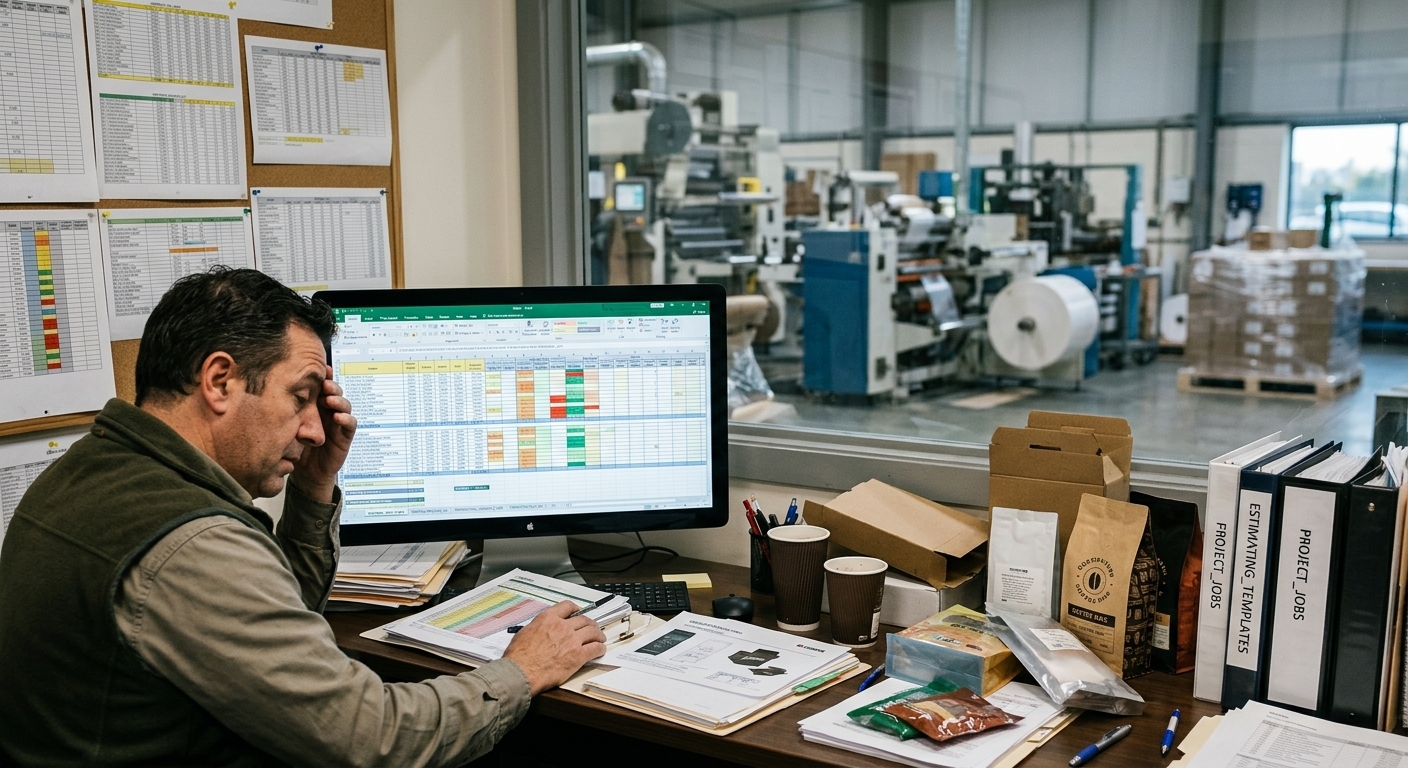
Somewhere in your plant right now, a job is taking longer than planned. No one has flagged it. No one will until month-end shows a thin margin. By then, the same job may already have been quoted again at the same price. That is the cost of limited visibility. It often does not show up where people expect. It is not just a missing dashboard. It is the gap between what you assumed when you priced the work and what happened when you ran it.
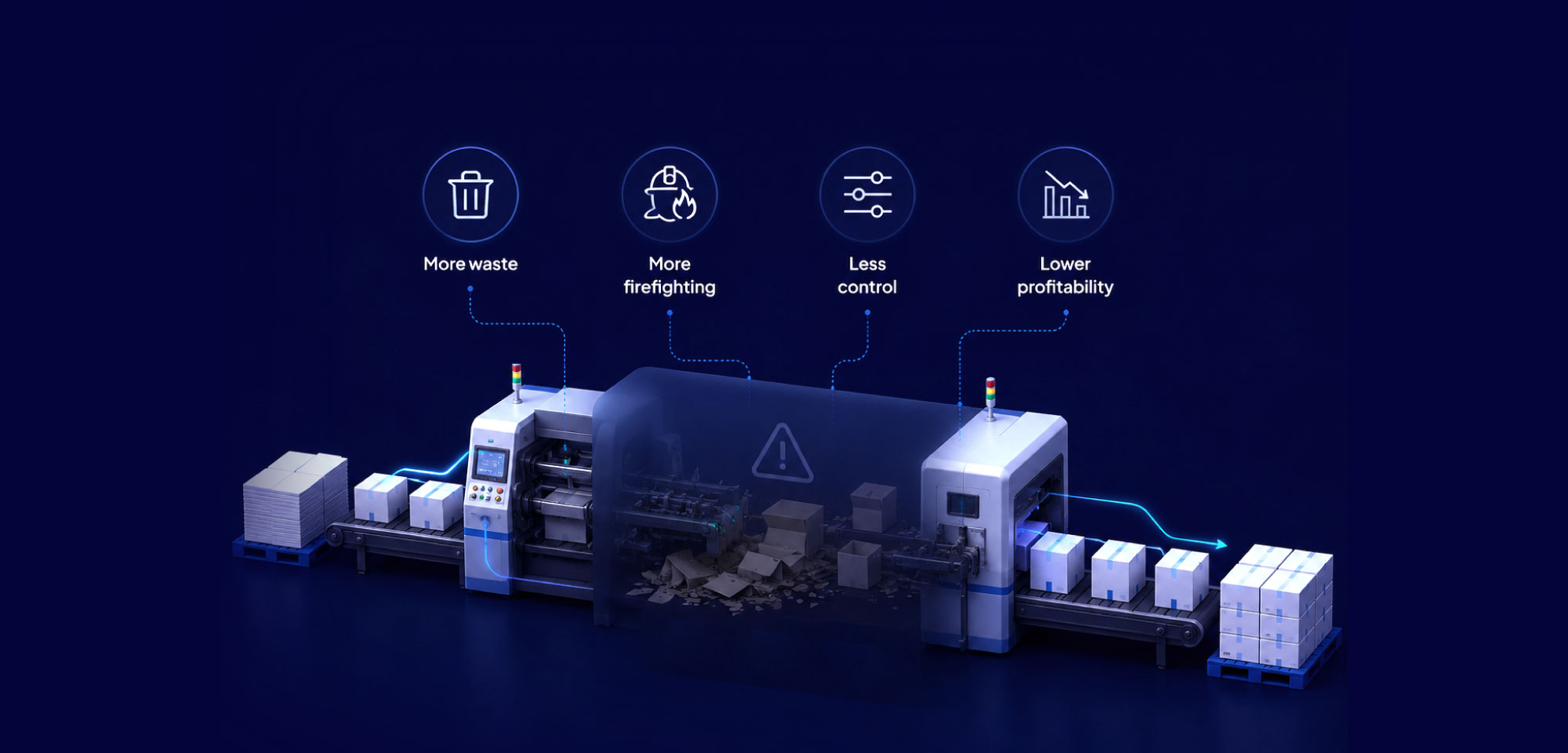
Limited visibility between estimating and actual production can slowly cut margins. It gets worse when old assumptions keep flowing into repeat quotes. Packaging manufacturing needs live, connected data across estimating, production, costing, and business intelligence to spot where jobs, customers, presses, or materials are lagging. A packaging-native ERP can close the gap between quote and actual results, helping teams price more accurately and act faster.
Why Quoting Assumptions Drift
Every quote is a bundle of guesses: make-ready time, run speed, waste, trim. Good estimators make good guesses, built from years of experience. But a guess only stays good if real results keep it in check. In many plants, that never happens. Actuals live on the floor, in a separate system, or in a spreadsheet someone exports at month-end. Estimating lives somewhere else. The two rarely meet.
How Margin Loss Builds Over Time
So the assumptions drift. Say a converter quotes a repeat job with a 45-minute make-ready because that is what the standard says. Production has been closer to an hour for months, maybe because of a substrate change or a tooling quirk no one wrote down. Each time the job comes back, it is priced on the old number, and each time it gives back a little margin. Spread that across a few hundred jobs and several customers. You will not see it on one P&L line. You will see it as the feeling that busy and profitable are not the same. ePS says the margin lost to fragmented quoting, late manual job costing, and multi-site blind spots can reach 2 to 5 percent a year.
The Difference Between Data and Visibility
Most plants have more data now than ever, so volume is not the issue. Try this test: can you ask a new question on Monday morning and have the answer before lunch?
- Which customers run over their make-ready most often?
- Which presses lose time on which substrates?
- Where did last quarter's quotes miss, and by how much?
If you need a custom report, an IT call, or the one person who knows the spreadsheet, you do not have visibility. You have an archive.
How a Packaging-Native ERP Closes the Gap
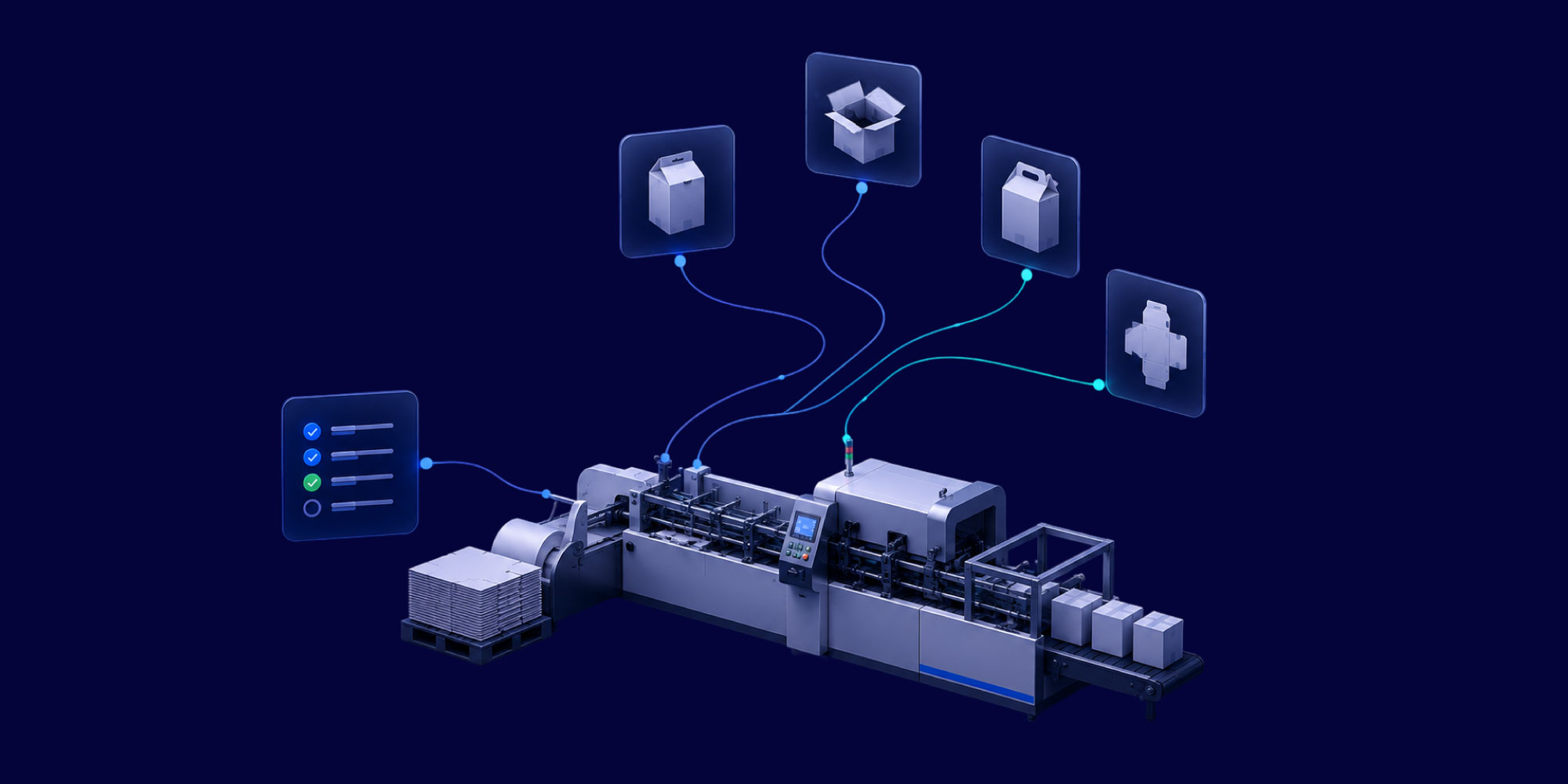
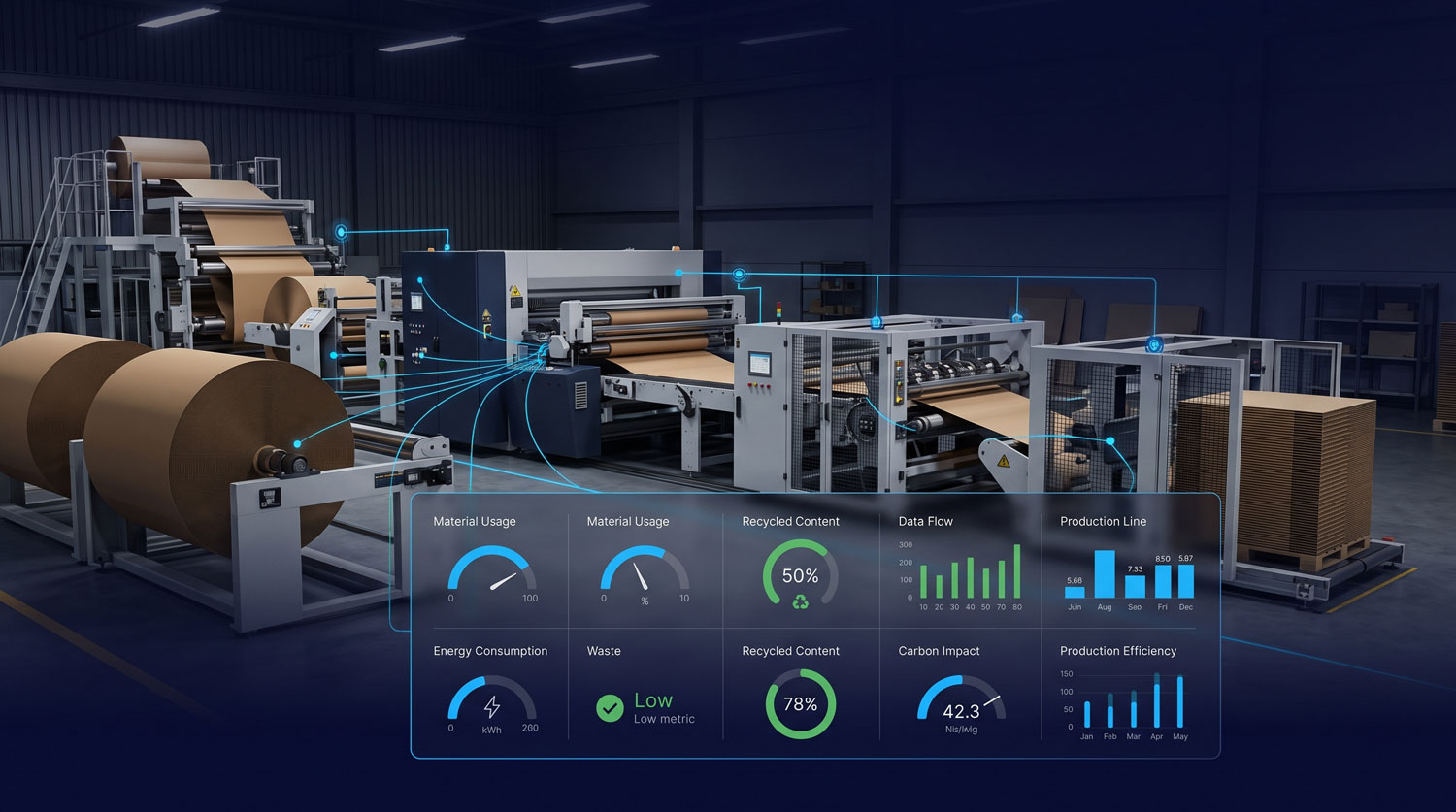
This is where a packaging-native ERP earns its keep. In CommandCore, estimating, quoting, orders, materials, tooling, and costing all run on one database. That means job cost is live instead of being reconciled weeks later. It also means estimates use real production data, not a standard someone set three years ago. Nothing gets re-keyed. Nothing waits for month-end export. A generic system can store the same numbers. It just does not know what they mean. It has no feel for how a packaging job moves through the plant. So each question turns into a report request. In a system built for packaging, those questions take a few clicks.
Example: Yerecic Label
Yerecic Label went looking for a fix for exactly this. The third-generation label converter runs plants in Pennsylvania and Arizona, and its teams were re-keying data between estimating, production and shipping while finance sat apart from the floor. When Microsoft announced the sunset of Great Plains, Yerecic treated it as a chance to rethink the whole setup, not just swap one system for another. The brief, as EVP Kristin Yerecic Scott framed it, was to remove duplicate data entry and give production a system built for labels. What the company wanted in return was one shared view of schedules, machine status and order progress across both plants. Josh Yerecic, EVP of Manufacturing, sums up the change as one of "visibility and speed."
Read how Yerecic Label pulled its data together.
Closing the Distance Between Quote and Actual
If you price work today, the most expensive thing you cannot see is probably not on the floor. It is the distance between your last quote and your last actual. Close that gap, and many other problems become easier to spot.
How Mature Are Your Packaging Operations?
Many packaging manufacturers still rely on spreadsheets, manual processes, and disconnected systems to manage estimating, scheduling, production, and reporting. But how does your operation compare to industry peers?
Takes less than 2 minutes to complete.