Beyond Greenwashing:CommandCore Sustainability Insights for Packaging
Corporate sustainability targets matter. CommandCore sustainability works best when those targets shape the next estimate, plan, and press run, and when the result can be proved with live data.
The easiest sustainability promise is the one made at board level. The hard part starts when a job reaches the plant. Which substrate will be used? How much makeready and trim waste will the route create? Which machine and run plan will cut changeovers? What actually happened during the run, and can the final carbon footprint be traced back to reliable production data?
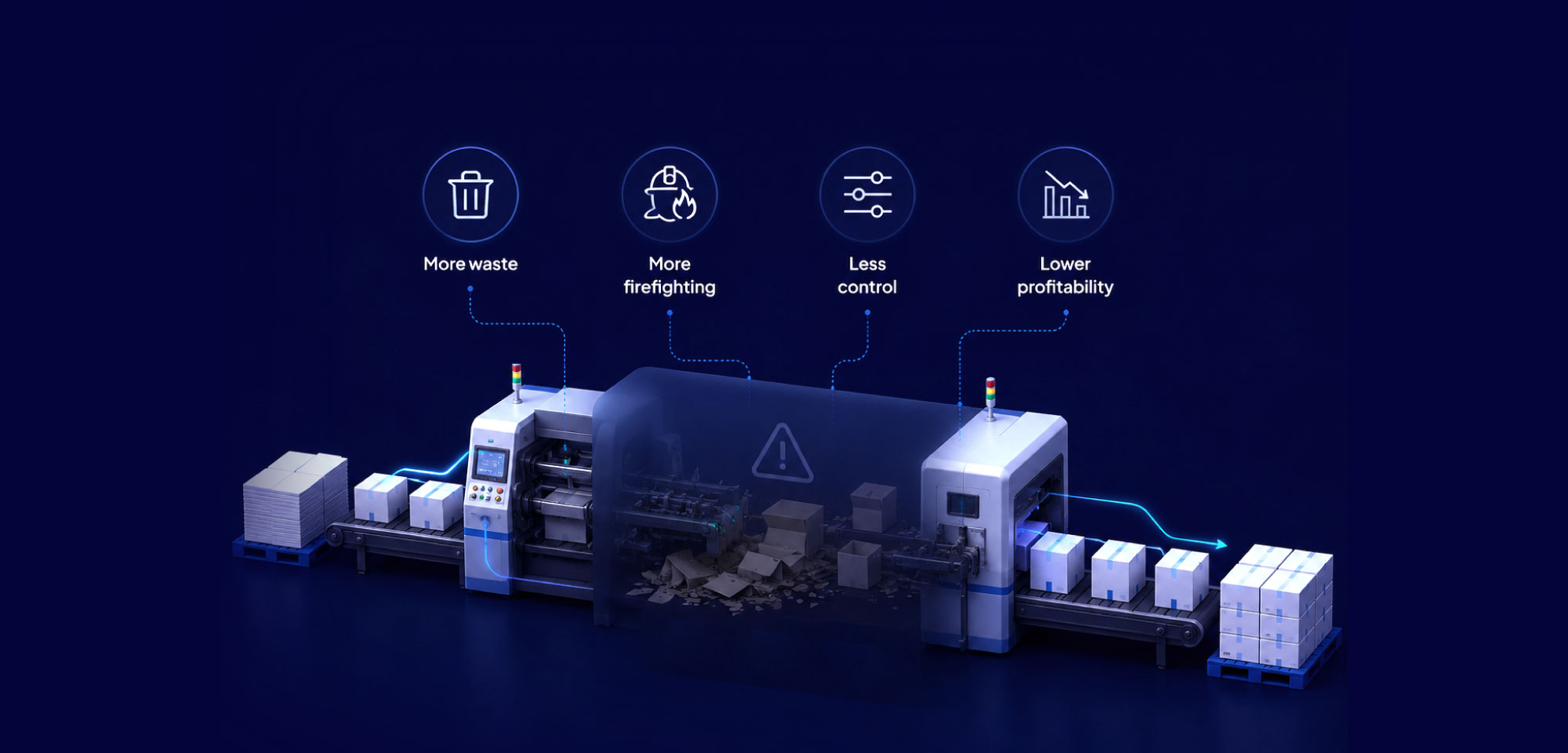
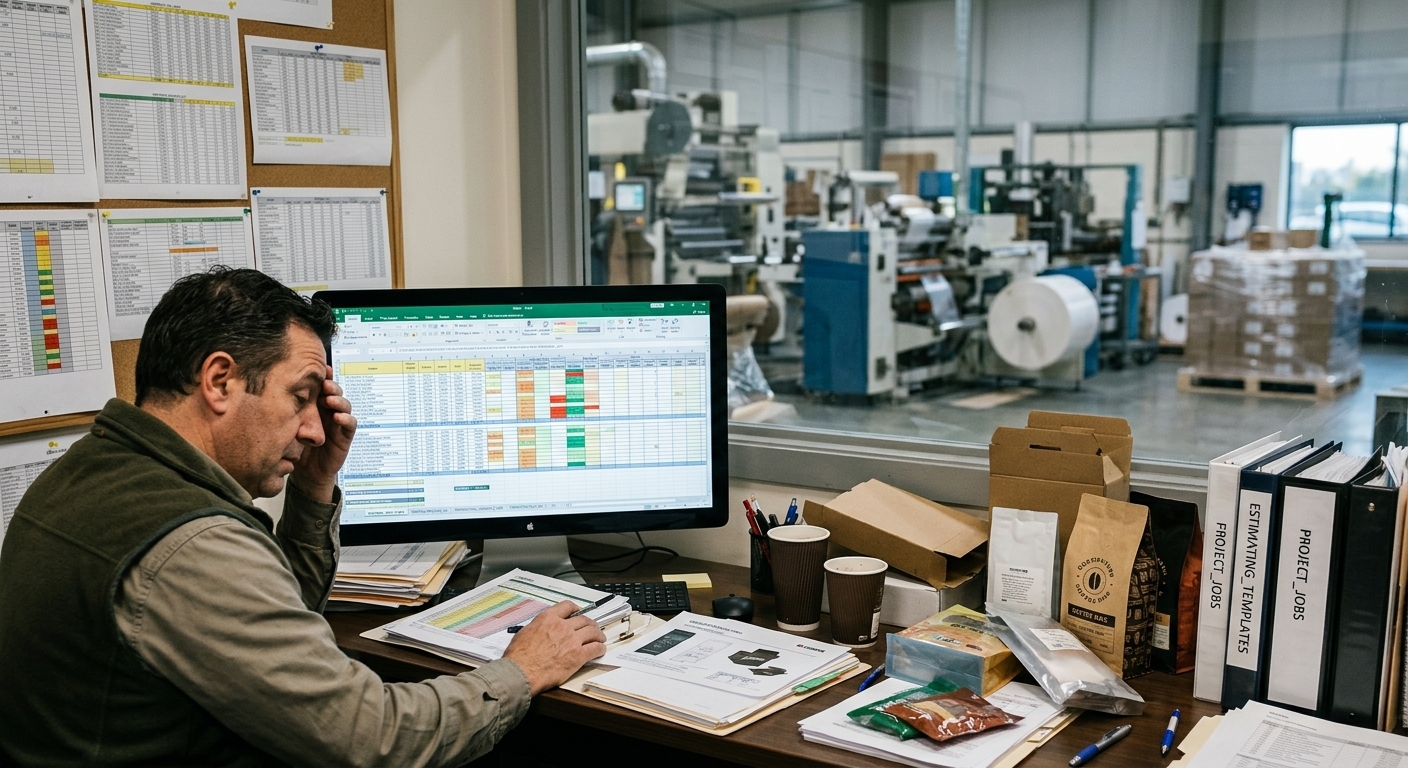
This is where the gap between ambition and execution shows up. Packaging makers may have yearly emissions figures, ASNs, supplier notes, and sustainability reports, yet still struggle to explain one order or the choice that would cut its impact. Data sits in separate ERP, estimating, scheduling, shop-floor, utility, and reporting systems. By the time it is joined up, it is too late to affect the job that made it.
Greenwashing is not always the result of deliberate overclaim. It can start with a simpler problem: the claim is made at one level of the business, while the evidence needed to support it sits, or is missing, somewhere else. The answer is not another dashboard of averages. It is a connected working system that makes sustainability measurable where cost, waste, and carbon are created.
What makes sustainability data actionable?
A carbon figure is useful for reporting. An actionable sustainability insight goes further. It shows what caused the result, who can change it, and which option is more likely to work. For packaging work, the data must arrive fast enough to affect a decision, be detailed enough to reach the job or process, connect to materials and production context, compare real options, and be traceable enough for customer or audit checks. A monthly plant total may show that energy use rose, but it cannot say whether the reason was a different mix, avoidable downtime, a poor route, or more output.
Actionable sustainability: Do not stop at what our footprint was. Ask which materials, machines, routes, and production events created it, and what we can change next time.
How CommandCore connects the decision to the outcome
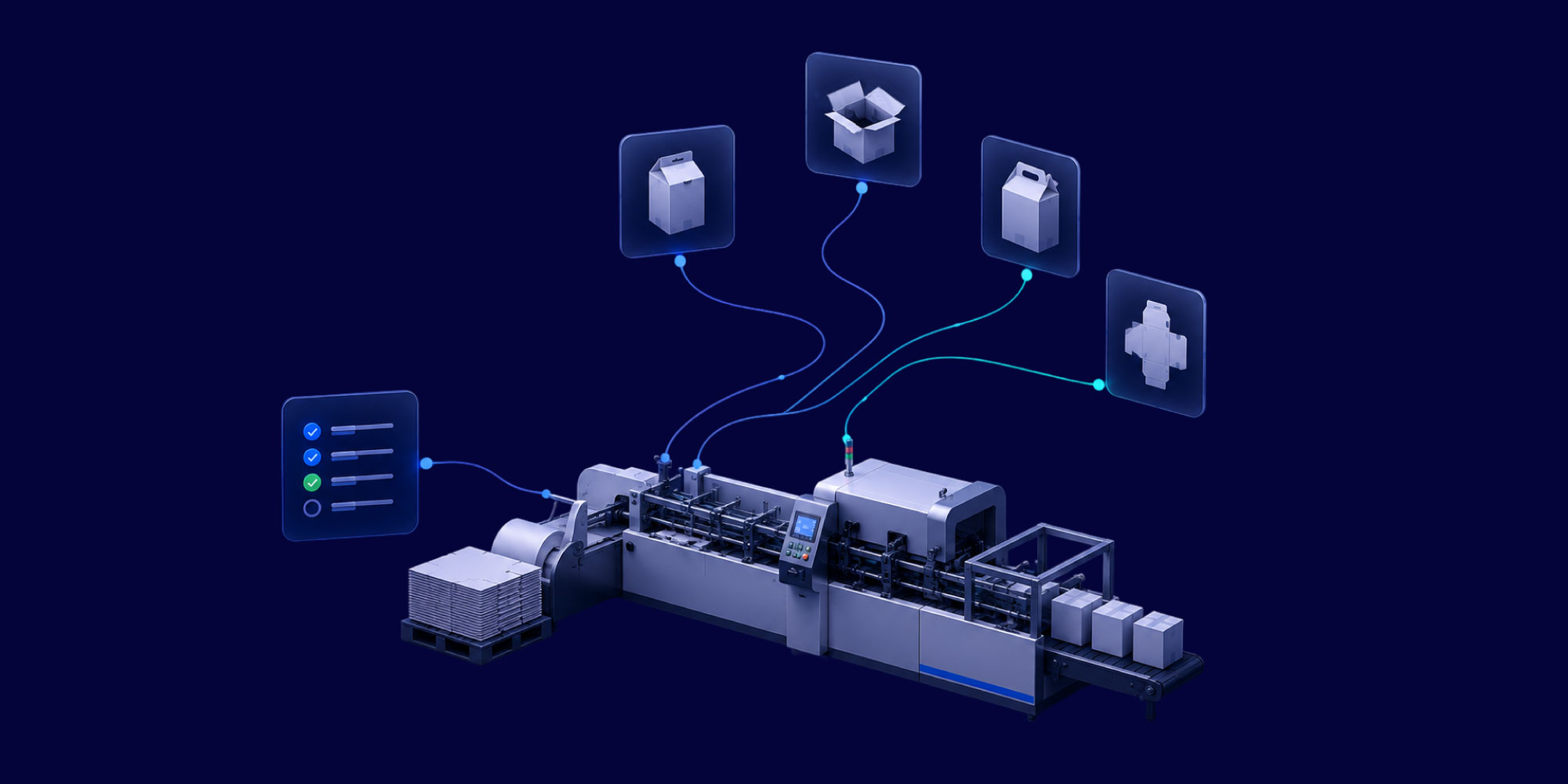
ePS CommandCore™ brings ERP, MES, control systems, operational excellence, smart scheduling, quality and compliance, sustainability, and supply agility together on a packaging-native base. That matters because environmental performance does not come from a sustainability team alone. It is the sum of choices made from estimating and buying through planning, production, finishing, and logistics.
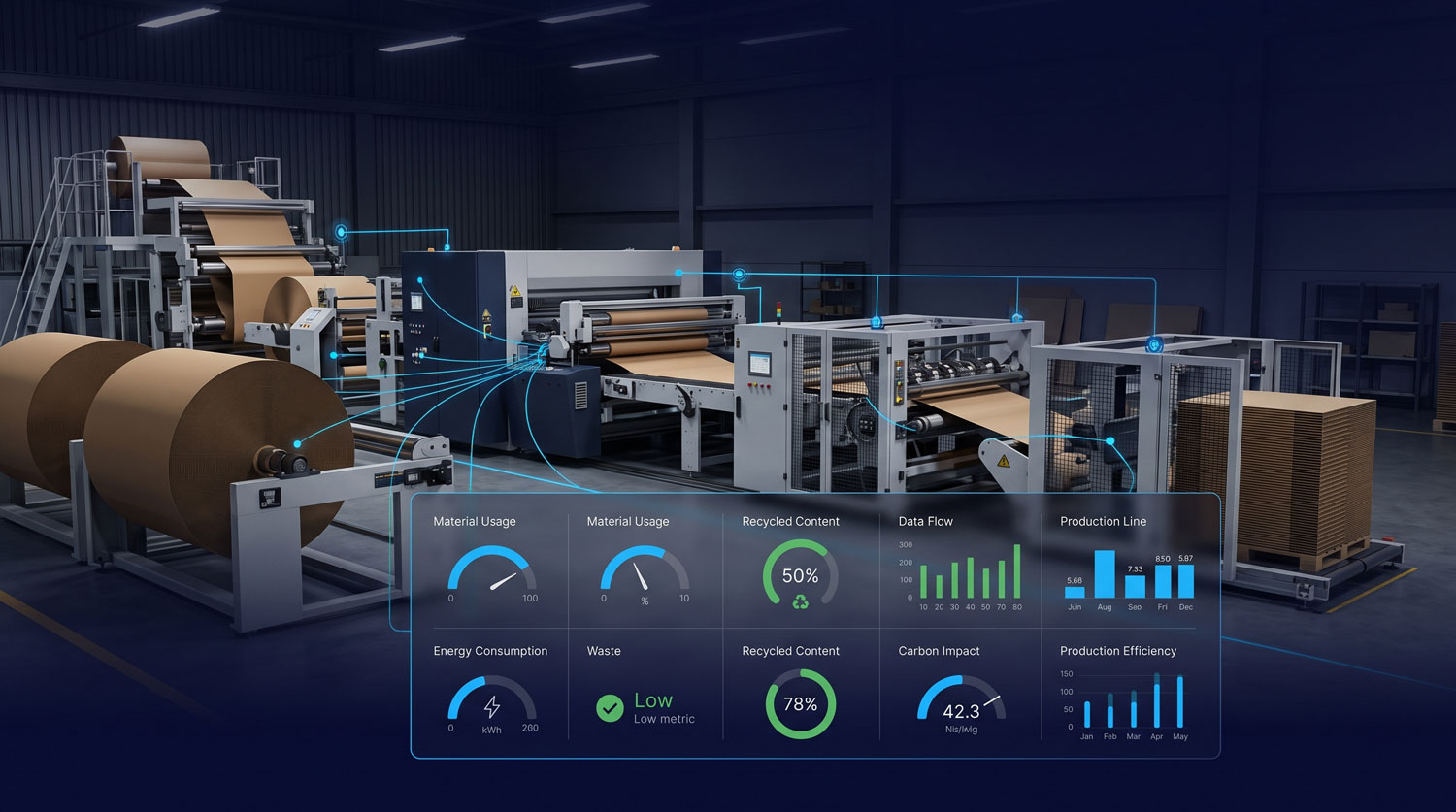
Instead of rebuilding the story after the event, CommandCore can connect the order, bill of materials, routing, machine activity, waste, production actuals, and key supply-chain data. CarbonQuota-powered carbon accounting turns that live activity into a consistent job-level footprint, using measured activity with the right calculation factors. The result is sustainability information with manufacturing context, not a detached corporate estimate.
1. Act before production starts
The first chance to cut impact is often before a job reaches the machine. At the estimating and planning stages, teams can review production and supply-chain scenarios and trade off cost, efficiency, and environmental impact. A lower-carbon choice that appears only after shipment is an observation. The same choice seen during quoting or planning is a decision.
This could mean comparing suitable material choices, production routes, or fulfilment scenarios; checking waste assumptions in an estimate; or testing how a different sequence changes setup and changeover needs. Smart Scheduling uses real capacity, limits, and changeover rules to build plans that can be done in practice, while what-if scenarios let planners see the effect of a change before they commit resources.
2. See what happens during the run
Plans matter, but real production is where assumptions are tested. CommandCore MES and Control Systems give job, machine, and shift views, with machine data capture, downtime measurement, and live waste tracking where the equipment is linked. That gives the context needed to separate a theoretical footprint from what the plant really made.
Material waste becomes more than a monthly scrap total. Teams can see where it happened and link it to the job and production stage, for example makeready, trim, process issues, rework, or an overrun. This detail makes action possible during the shift and helps stop the same loss from being built into the next repeat order.
3. Put energy data in production context
Energy is often reported as a plant-wide utility total. That is enough for a bill, but weak as a production tool. Where energy or resource-use data is available from linked systems, meters, or approved operating inputs, CommandCore can match it to the machines, processes, time, and output that give it meaning. Teams can then compare similar jobs or routes, study unusual use, and see whether a change cut energy intensity rather than just lowering total output.
Better scheduling also matters. Avoiding unnecessary setups, long idle time, and repeated changeovers can cut the material and energy load tied to a run. The key point is that the energy insight sits next to the working cause, so people can act rather than just report.
4. Calculate carbon at job level
Carbon footprint calculation tools built into the ePS software ecosystem use data across raw materials, production processes, logistics, and end of life processes to generate standardized, provable carbon-footprint calculations. Connected to CommandCore, this lets the footprint follow the same job that was estimated, scheduled, produced, and costed.
For customer-facing teams, that creates a stronger answer than a generic corporate emissions statement. They can give carbon information tied to the product or order and talk through real alternatives. For operations, the same result shows hotspots. For leadership, it gives a stable base for tracking progress across products, customers, plants, or periods.
5. Learn from the completed job
The improvement loop closes when actual results feed the next decision. Comparing the estimate with the finished run shows where waste factors, speeds, resource assumptions, or route expectations were wrong. Those lessons can improve the next quote, schedule, and standard work instead of staying in a sustainability report that production teams rarely use.
What this looks like in a real packaging workflow
Consider a repeat packaging order that has long been priced and planned from standard assumptions. The customer now asks for a product carbon footprint and wants to know whether the converter can cut it without hurting quality, performance, or delivery.
1. Estimate. The team uses the current job spec, material data, and route to set cost and carbon baselines, then reviews suitable options before sending the quote.
2. Plan. The planner tests realistic production sequences against capacity, due dates, and changeover rules. The chosen plan is based on what the plant can do, not an isolated sustainability target.
3. Run. Machine, operator, downtime, and waste data is captured against the live job where a connection exists. Deviations become visible while they can still be fixed.
4. Verify. The finished job combines production actuals with the right material, process, energy, and logistics inputs to produce a defensible carbon result.
5. Improve. The team compares planned and actual performance, finds the most useful change, and carries the lesson into the next repeat order.
The main levers differ by segment. A label converter may focus on substrate, press sequence, makeready, and matrix waste. A folding-carton plant may look at board yield, tooling, routing, and finishing stages. A flexible-packaging operation may need to see material structures, extrusion or conversion steps, trim, and energy-heavy processes. A corrugated business may focus on board conversion, trim, sheet planning, and machine performance. The common need is a connected record of the job from sales promise to production outcome.
One evidence base, different decisions
- Estimating and sales: compare good options before setting price, spec, and environmental info for the customer.
- Planning: model capacity, limits, and sequence so waste- or energy-cut ideas stay practical.
- Production: see downtime, waste, and performance against the job and machine, so action is faster.
- Procurement: review material and supplier data within the needs of the real product and route.
- Sustainability, quality and compliance: work from traceable working records rather than chasing spreadsheets across teams and sites.
- Leadership: view margin, throughput, waste, and carbon through common definitions, so environmental progress sits alongside business performance.
From disclosure pressure to operational readiness
The need for better evidence is growing. The EU Packaging and Packaging Waste Regulation (PPWR) generally applies from 12 August 2026 and adds requirements across the packaging life cycle, while brands, retailers, and other customers ask suppliers for more detailed material and environmental data. Rules and customer asks vary by market, product, and role in the chain, but the direction is clear: high-level claims are no substitute for accessible, traceable data.
Technology cannot guarantee compliance on its own, and carbon accounting does not remove the need for governance, method, and data-quality controls. What CommandCore provides is the working base: a way to connect reporting needs to the records created while work is being estimated, bought, planned, produced, and shipped. That reduces the scramble to rebuild evidence after a request arrives.
Start with the decision you want to improve
Actionable sustainability does not need every plant, meter, and supplier dataset to be perfect on day one. A practical start is one repeat product family, one production route, or one customer carbon request. Work out which material, production, waste, energy, and logistics data already exists; find the gaps; set a baseline; and choose the one decision most likely to improve the result.
CommandCore pillars can be added alone or used together on the same base. That lets a manufacturer start with one sustainability, MES, control, or scheduling need and widen the data loop as maturity grows, without treating sustainability as another separate point tool.
The difference: A sustainability statement shows intent. A working sustainability system shows what happened, why it happened, and what the plant should change next.
Beyond greenwashing means connecting promise to production
Packaging sustainability becomes credible when every claim has a path back to operational evidence, and every insight has a path forward to a better decision. CommandCore connects carbon accounting with the materials, machines, schedules, and real production events that shape the result. It turns sustainability from a periodic reporting task into part of how a job is quoted, planned, run, verified, and improved.
That is how packaging makers move beyond broad pledges: not by saying more, but by giving teams the insight to act and customers the evidence to trust.
Ready to make sustainability data operational?
Book a CommandCore discovery workshop to map the data, decisions, and improvement opportunities across your packaging operation