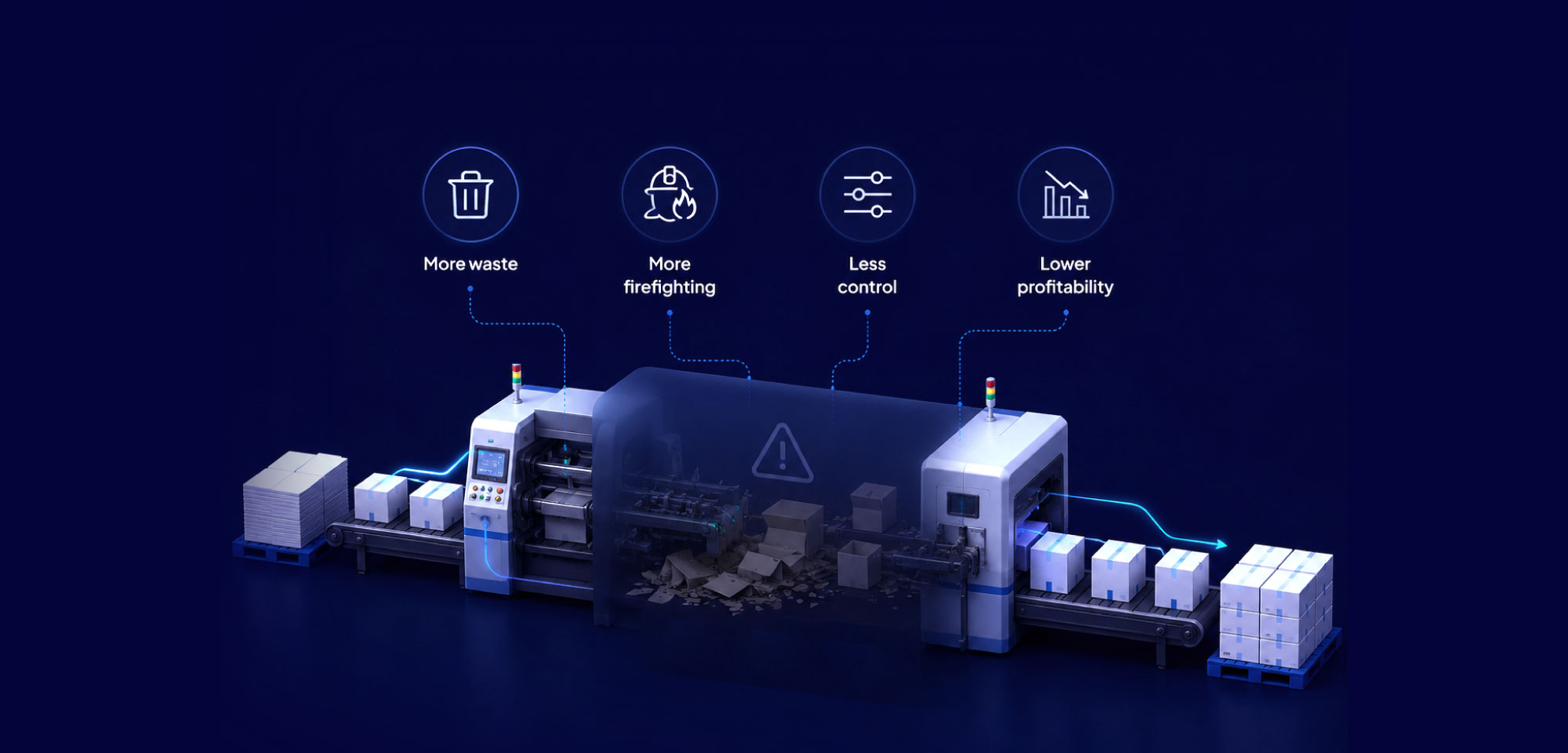
In short, a generic ERP is built for transactions, and packaging is mostly about things that move. Most packaging manufacturers already run a generic ERP, and it does its job. Finance closes the month. Purchasing raises orders. HR runs payroll. So when the plant floor still lives in spreadsheets, it is easy to blame the ERP. But the ERP is performing its intended function. That is why ERPs fail on the plant floor, even when the back office looks fine.
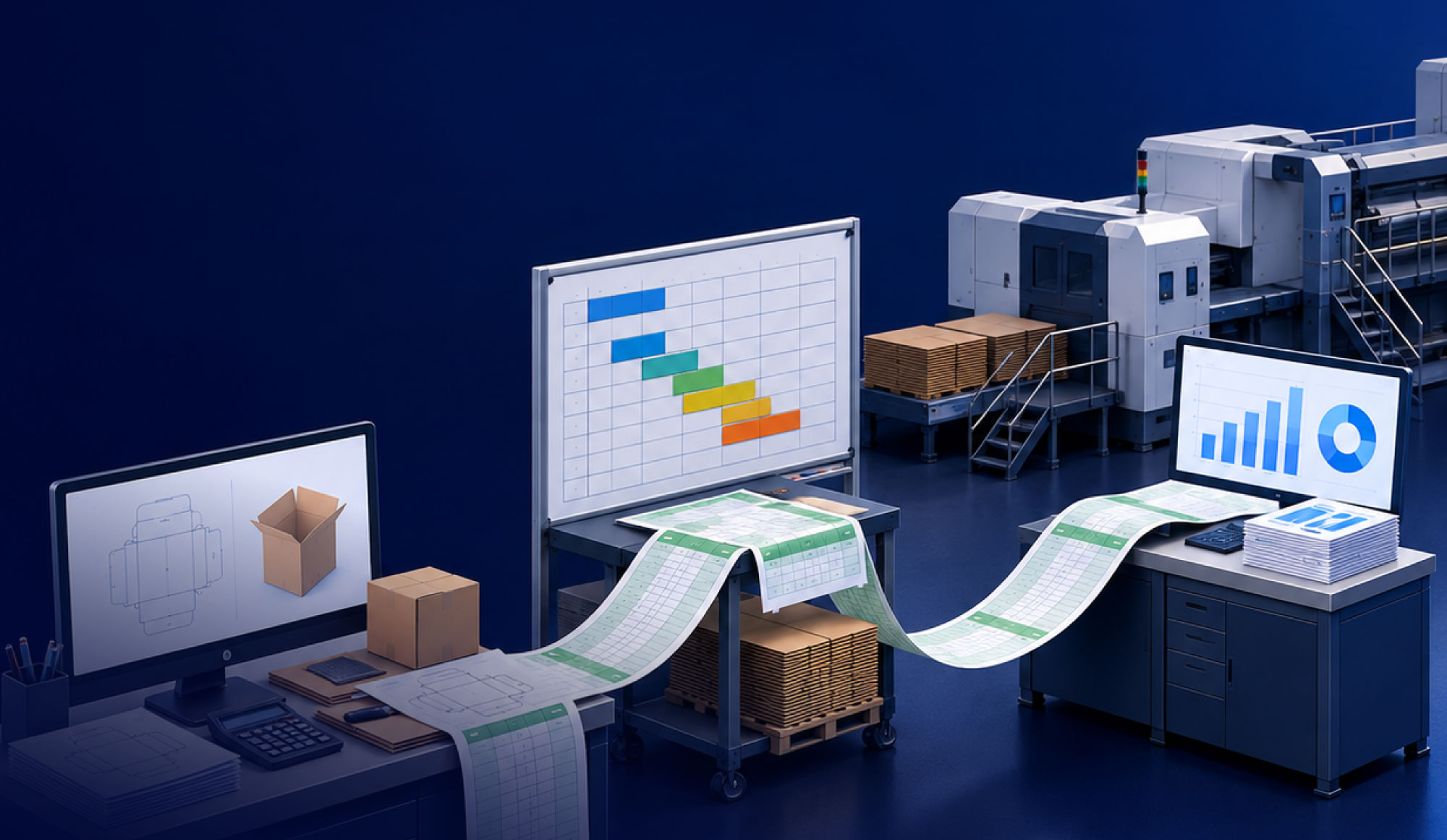
A generic ERP system includes shared transactions such as invoices, ledgers, purchase orders, and headcounts.
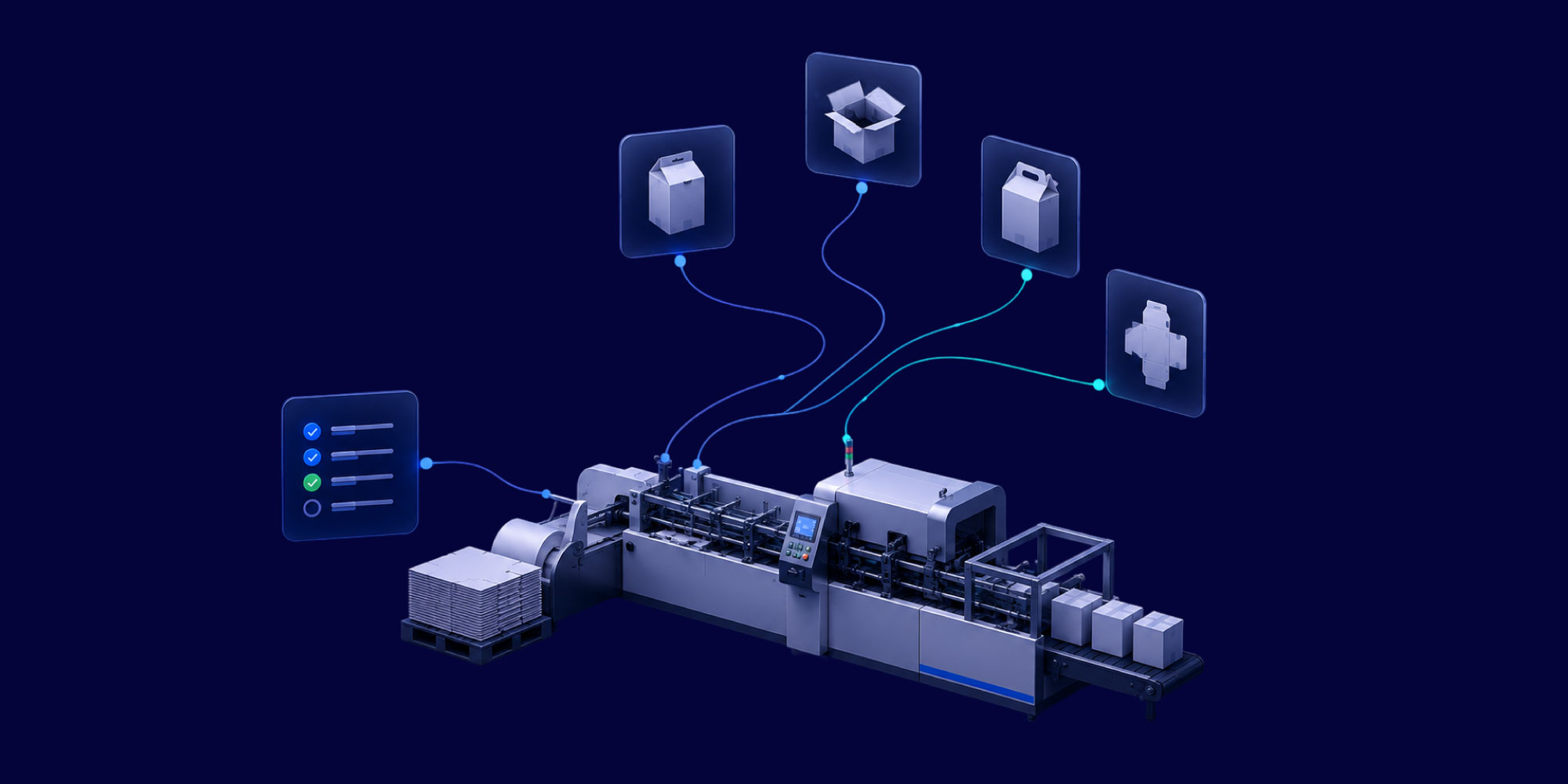
A packaging ERP system builds around the flow of work, from raw material at the dock to product leaving the building.
Those are different jobs, and treating them as one is where the trouble starts.
Your ERP Is Doing Its Job. Packaging Is Not Its Job.
Packaging is complex because the work changes fast. SKU counts are high. Repeat jobs are common, but they are rarely identical. Jobs shift mid-run: a quantity moves, a spec shifts, a press goes down, and the schedule changes overnight.
A generic system can be bent to handle this, in theory. In practice, it takes tweaks, workarounds, and people who remember how the pieces fit.
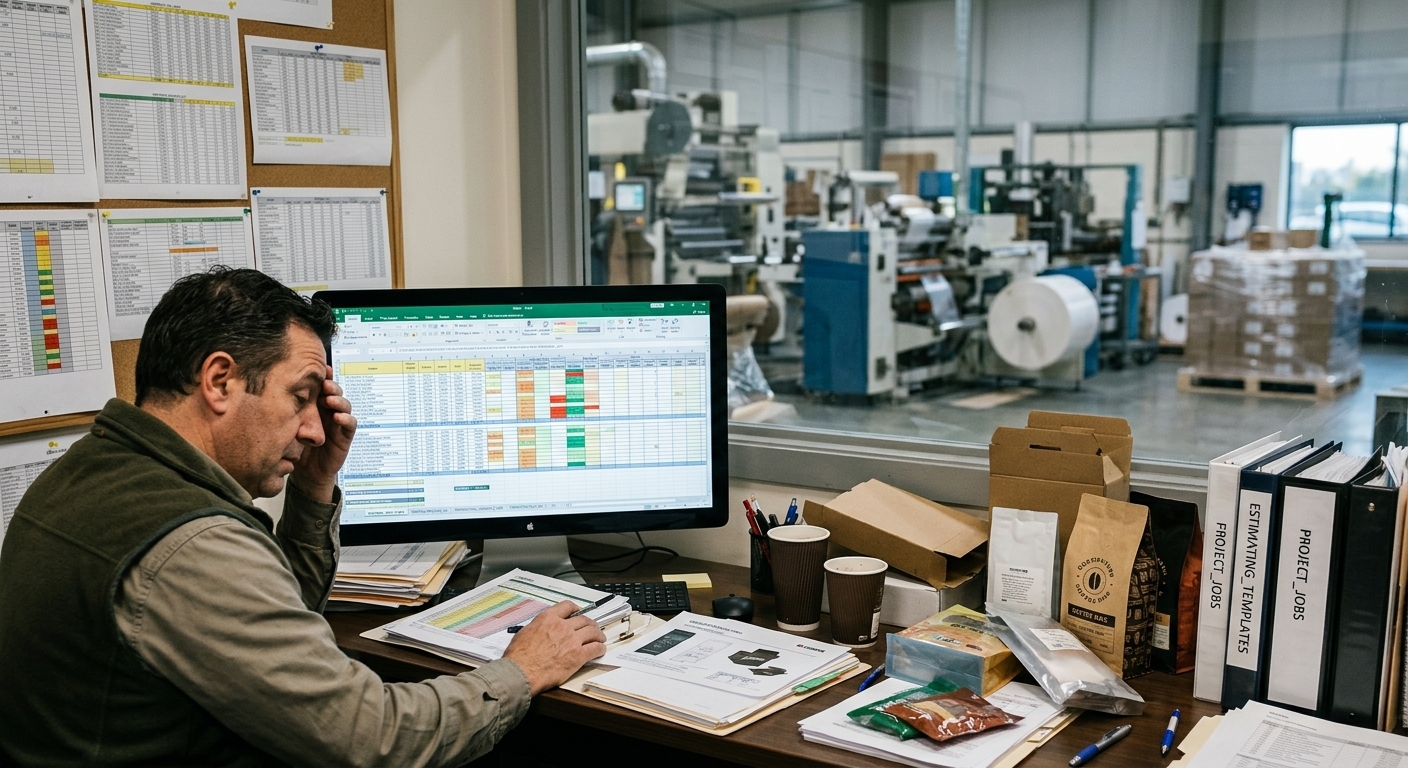
That is where the letdown comes from. It is not a failed rollout. It is a slow pileup of small patches: a spreadsheet that tracks what the ERP cannot, job details typed twice, and an estimate built from memory because the real numbers are too hard to pull.
Where Should the Line Sit?
Here is a simple test. Does the record ever leave the screen?
If it is only a transaction and never moves in the real world, a generic ERP handles it well. An invoice, a balance sheet, a payroll run, a purchase ledger. There is no need to move any of it. The moment a physical thing enters the picture, the answer changes.
Take raw material to arrive at the dock. Posting the receipt is easy, and any ERP can do it. What matters is what follows: where the material goes, which jobs it is tied to, how much is used on press, and what is left. That is no longer just a transaction. They are tracking a physical thing as it moves. The same is true once a job turns material into product on the way to shipment. So the rule is simple. Transactions are a generic ERP's home turf. Anything that moves in the real world is where a packaging system earns its keep.
Where Should a Packaging Manufacturer Start?
Start with the part that a generic ERP was never built for: the physical side of the business. Estimating, material, scheduling, and floor work. A packaging ERP can connect to the finance and purchasing systems already in place, letting the manufacturer improve process visibility without ripping everything out on day one.
From there, the data proving the case. Finance gets costs from what happened on press. Purchasing sees real material use instead of estimates. With most tasks on a packaging system, it's valid to question the role of a standard ERP system.
If your team keeps patching around your ERP, you may be asking it to do a job it was never meant to do. Try the test on your own plant floor. List what your people track outside the system, then ask of each item: does this move in the real world? The answers show where the line should sit.
How Mature Are Your Packaging Operations?
Many packaging manufacturers still rely on spreadsheets, manual processes, and disconnected systems to manage estimating, scheduling, production, and reporting. But how does your operation compare to industry peers?
Takes less than 2 minutes to complete.