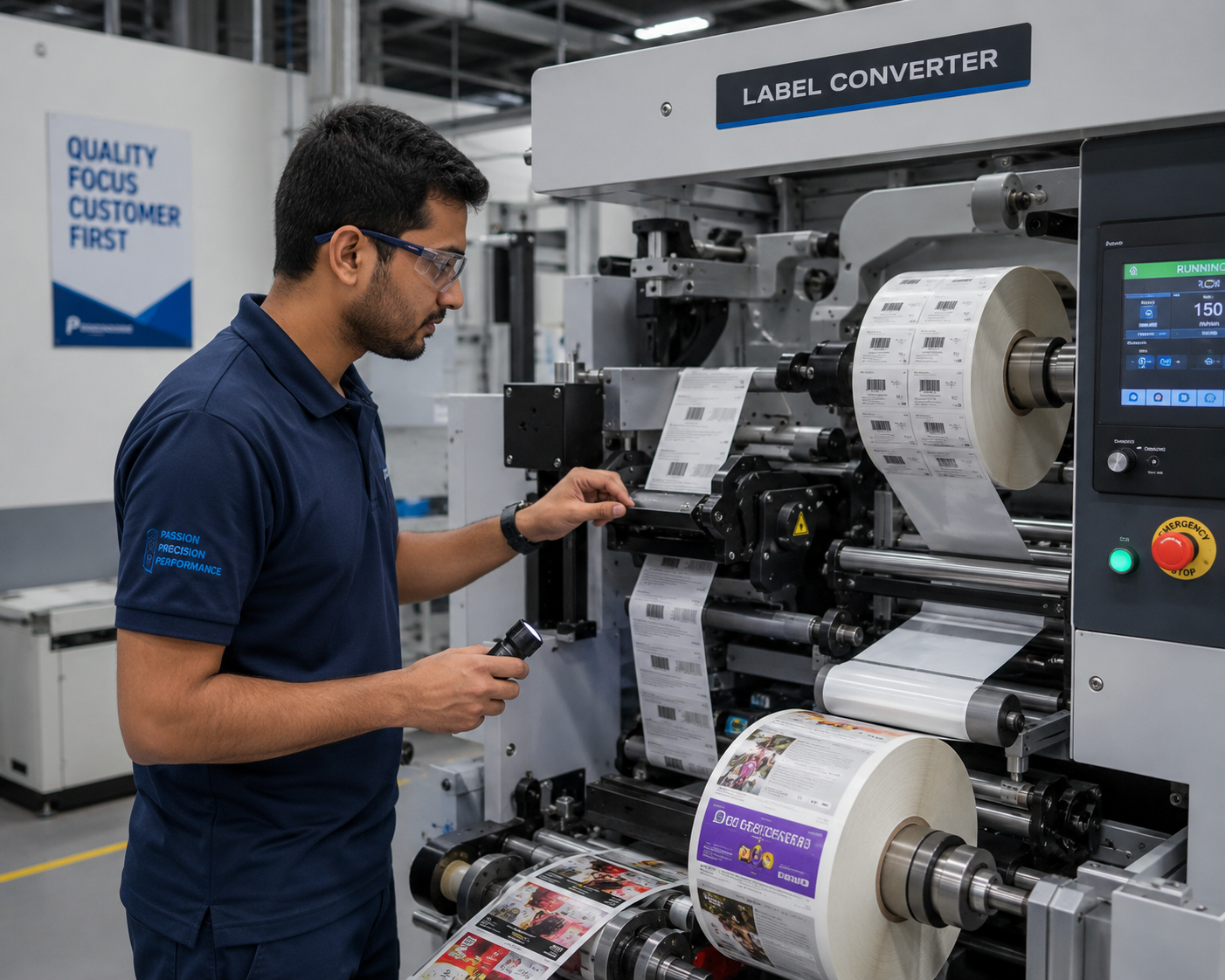
Independent label converters have never lacked craft, experience or customer commitment. Many have invested carefully in press capability, substrate knowledge and short-run responsiveness. The pressure now is different. Customers are not only asking whether a converter can print the job. In this climate, ERP for label converters helps teams respond faster and see risks earlier without changing who they are.
They are inquiring about the speed of generating a quote, the confidence in order management, the ability to detect material shortages early enough to respond, and if the business can continue to operate efficiently when the key person familiar with the process is absent. That is why ERP for label converters is no longer a large-business concern. It is a competitive baseline.
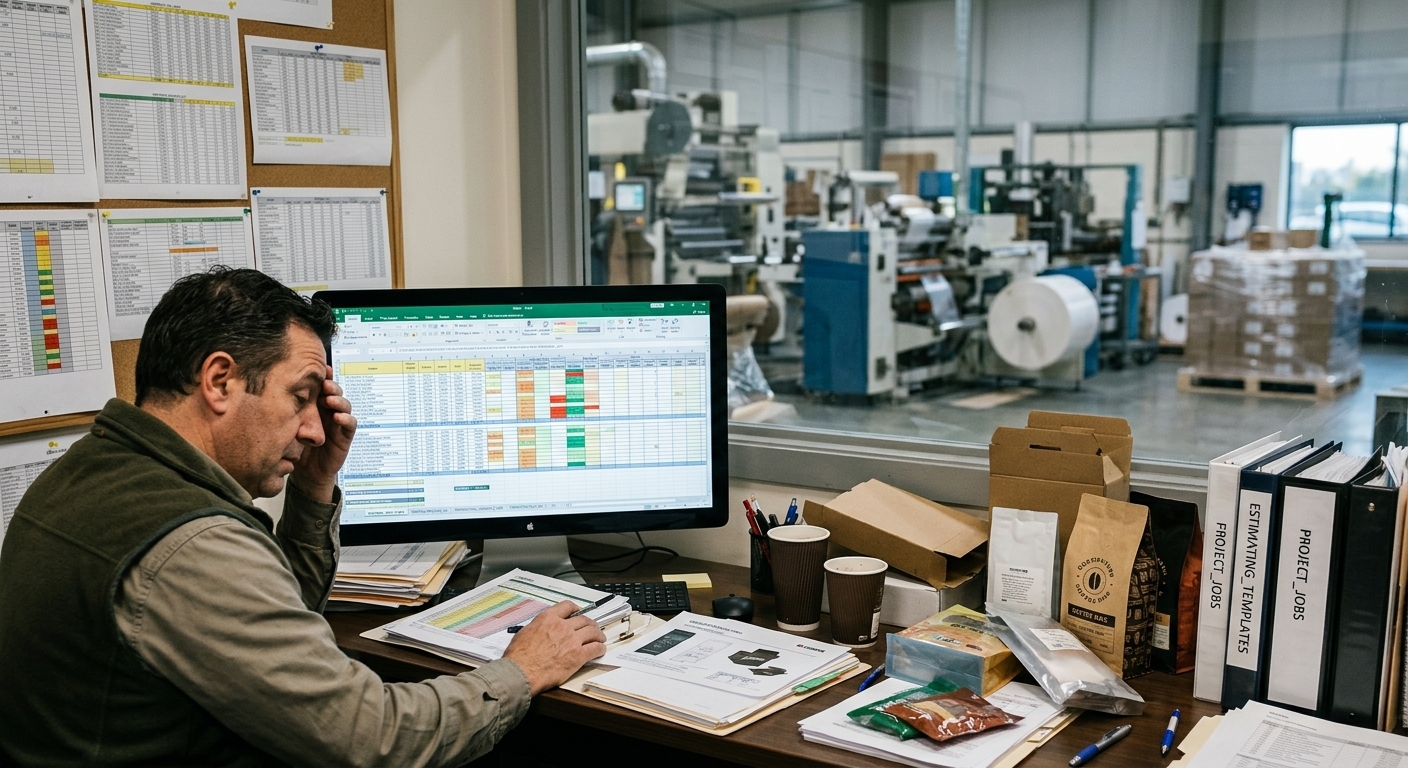
A lot of smaller label converters still rely on tools that don't work together for their day-to-day tasks: spreadsheets for estimates, different records for customer orders, manual inventory checks, and information stored in the minds of experienced employees. Those workarounds can feel practical because they were built around the way the business already operates. But as order volumes, SKU counts and customer expectations increase, the cost of those workarounds becomes harder to ignore.
How disconnected workflows damage label converter margins
Small problems that compound into serious risk
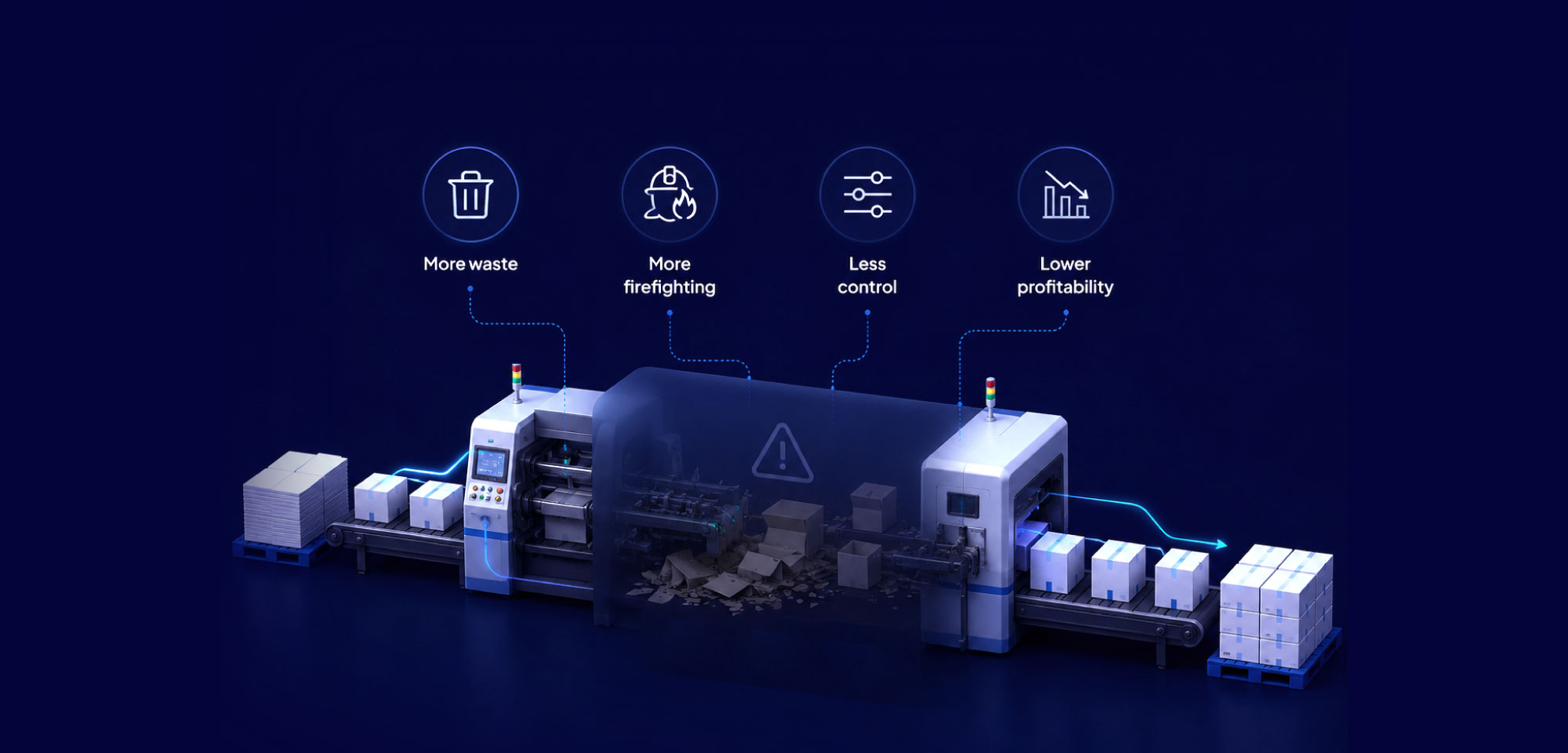
A missed material shortage, a quote based on old assumptions, a job that takes longer than expected, a customer update that requires chasing information from three places - none of these may look like a major system problem on its own. Together, they create drag. They slow response times, reduce confidence in margins, and make it harder for owners to see what is really happening inside the business.
When institutional knowledge is the only system
This is especially important for independent converters where one person may wear several hats. The same person may estimate, buy materials, talk to customers and make production decisions. If that knowledge is not captured in the system, the business becomes dependent on memory and experience rather than repeatable process.
How Paxis ERP is built for independent label converters
Purpose-built for label work, not adapted from generic ERP
Paxis ERP is positioned for small and growing independent label converters. It operates in the cloud, specifically tailored for both digital and analog label tasks. It is intended to provide smaller teams with effective ERP features, but without the complexity of a full-scale enterprise system. The point is not to turn a small converter into a large corporation. The point is to make the business easier to run, easier to scale and easier to understand.
Connected operations across the full production workflow
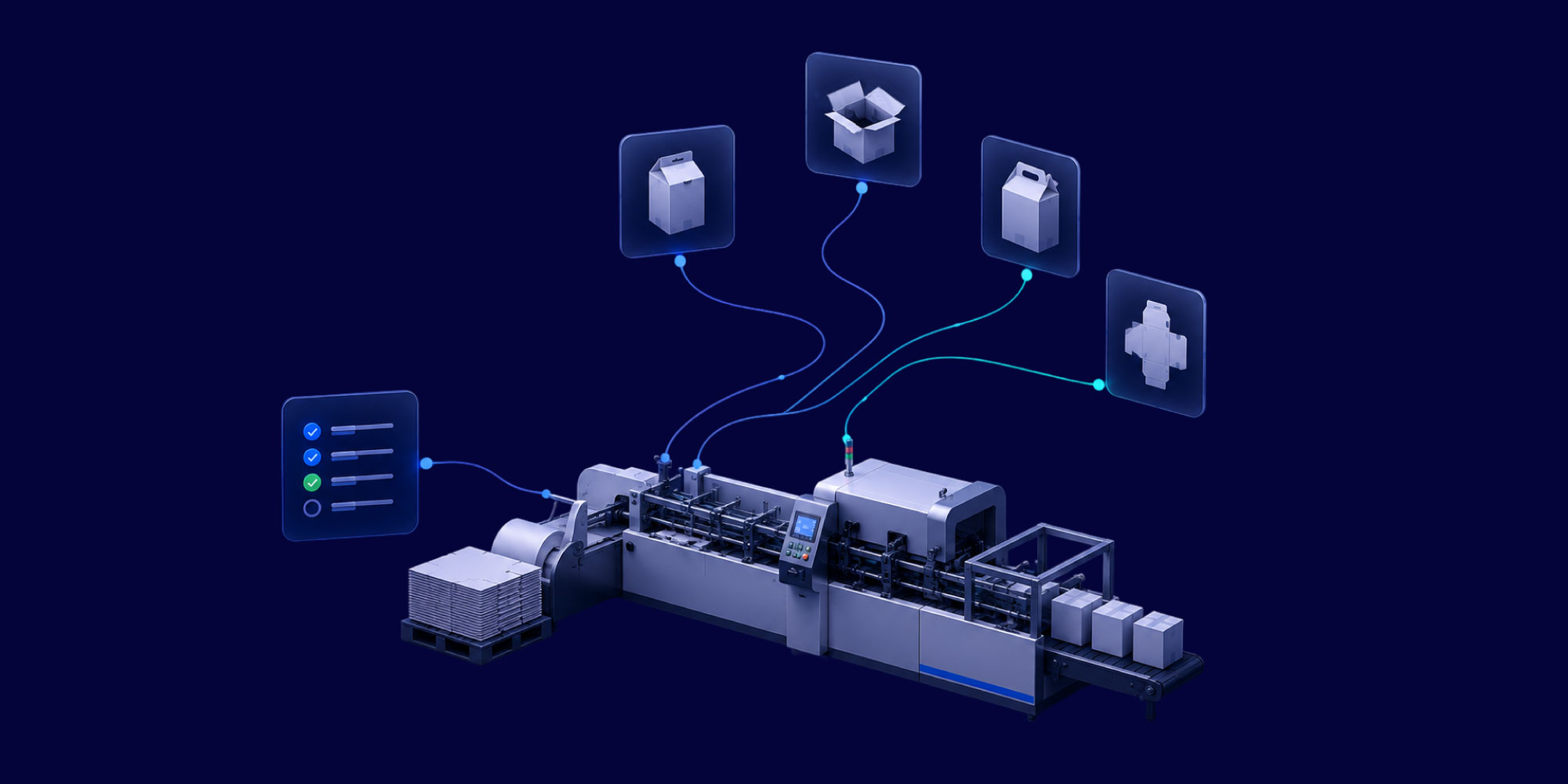
Paxis brings together core operating areas that matter every day: quotes and orders, advanced estimating, inventory, production management, purchasing, shipping, accounting integration and real-time data collection. That makes it easier for a converter to move from enquiry to quote, from quote to order, from order to production and from production to shipment without relying on disconnected spreadsheets or manual follow-up.
Cloud-native ERP that fits how label converters actually work
Rapid onboarding without IT dependency
Small converters do not need a system that assumes they have a large IT department. Paxis is cloud-native ERP for label converters, built for rapid onboarding. Smart Help and a user-friendly experience support adoption by teams that need to keep running the business while they learn a new system.
A system change that works around the business, not against it
That matters because software change is not only a technology decision. For the owner of a smaller label company, it is a time decision, a risk decision and a margin decision. The system has to help the business quickly, without creating months of disruption or forcing the team to reshape the way they work around generic software.
The competitive case for label converter ERP is straightforward
The market is rewarding converters that can respond quickly, quote accurately and make decisions from better information. Independent converters can compete, but they need ERP for label converters that matches their size, their speed and their reality. Paxis gives small and growing label businesses a practical route to stronger operational control without pretending they are enterprise businesses.
Frequently asked questions
What is short-run margin erosion, and why does it often go unnoticed?
How do disconnected tools contribute to margin erosion for label converters?
How does Paxis ERP improve quoting to protect short-run profitability?
What happens after the job, and how does Paxis help teams learn from actual costs?
How does better material visibility in Paxis ERP protect margins without enterprise complexity?
Ready to see Paxis in action?
Schedule a personalized demo and see how ePS fits your operation.