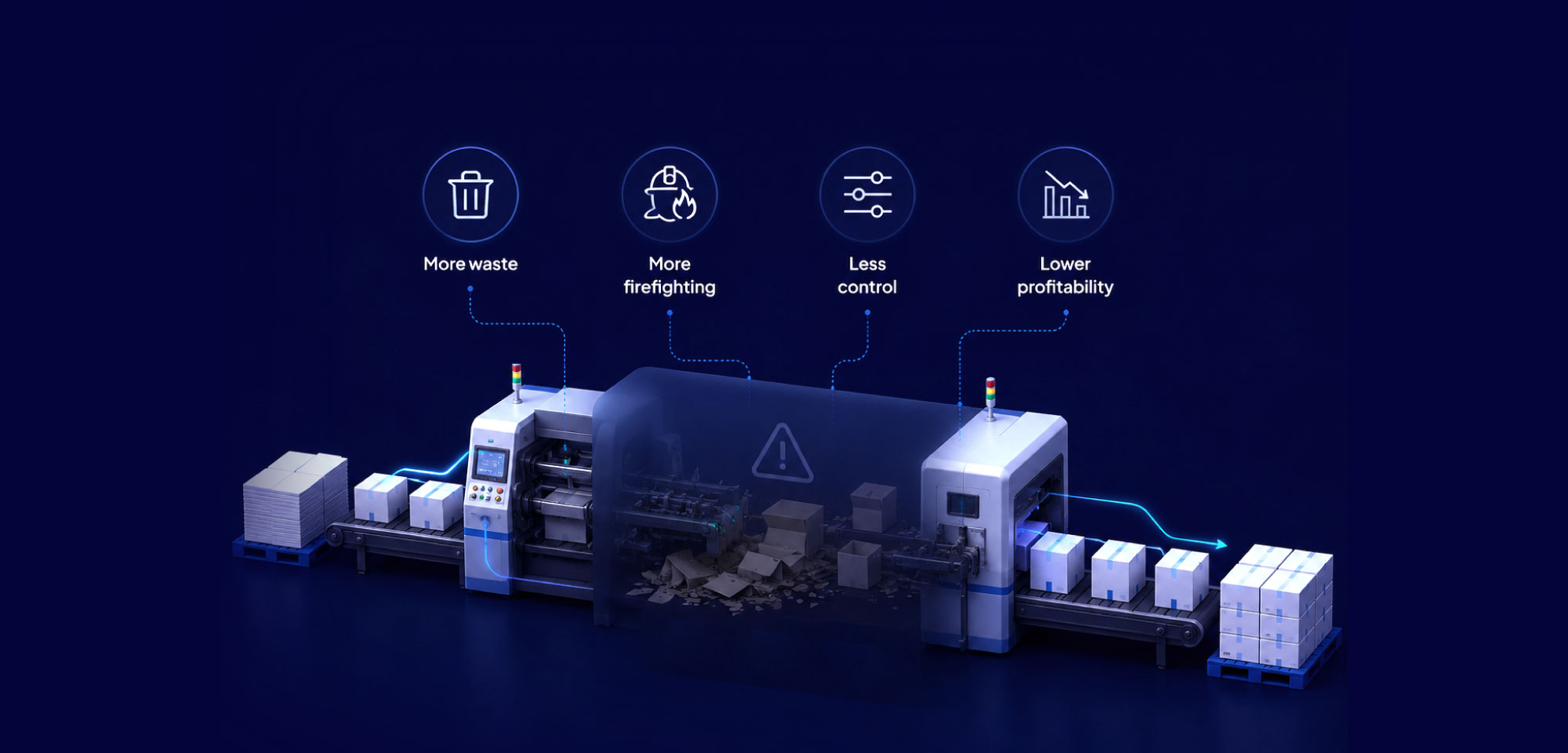

Short runs can be a real strength for independent label converters. They help smaller businesses stay responsive, serve local customers and win work that larger competitors may not want. The risk is that short-run margin erosion happens quietly, without ever showing up as a single obvious problem. If the business cannot see the true cost of each job, short-run responsiveness can become a slow drain on profit rather than a competitive advantage for label converters.
Short-run margin erosion often stems from small, compounding inefficiencies and disconnected tools that hide true job costs. Paxis ERP mitigates this by automating accurate time-and-materials estimating, optimizing machine/process selection, and improving visibility into inventory, waste, and actual costs. Simple data collection delivers timely operational insight so teams can quote confidently, learn from every job, and reduce manual friction. This keeps short-run responsiveness a profitable advantage for small and growing label converters. It shows up as a job quoted quickly to keep a customer happy, a small material change absorbed because it does not seem worth revisiting, press time running slightly longer than expected, or waste creeping a little higher than planned. Individually, none of this looks serious. Across dozens or hundreds of jobs, short-run margin erosion can quietly reshape the profitability of the business.
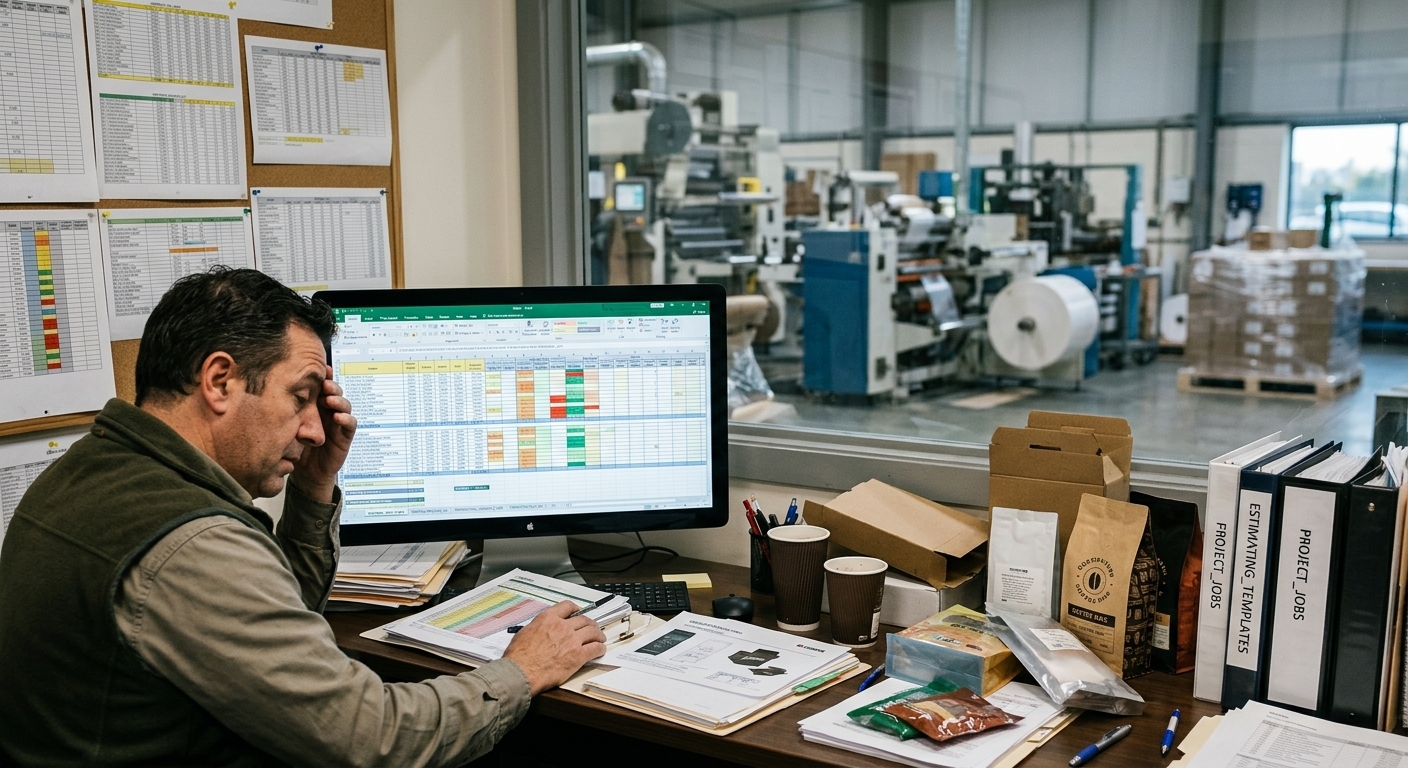
That is why short-run margin erosion deserves the same attention as press capability or substrate knowledge. For many smaller label businesses and label converters, the daily workflow still depends on disconnected tools spreadsheets for estimating, separate records for customer orders, manual checks for inventory, and knowledge held in the heads of experienced staff. Those workarounds can feel practical because they were built around the way the business already operates. But as order volumes, SKU counts, and customer expectations increase, the cost of those workarounds becomes harder to ignore.
How short-run margin erosion happens unnoticed
Small inefficiencies that compound
A missed material shortage, a quote based on old assumptions, a job that takes longer than expected, a customer update that requires chasing information from three places - none of these may look like a major system problem on its own. Together, they create drag. They slow response times, reduce confidence in margins, and make it harder for owners to see what is really happening inside the business.
When quoting relies on memory, not data
Many smaller label converters still quote from a mix of spreadsheets, experience and remembered assumptions. That can work when the job mix is stable and the same people are involved every time. It becomes harder when customers ask for more versions, more SKUs and faster turnarounds. The team needs to know which route is most efficient, what materials are involved, how time and materials should be estimated, and whether the quoted price actually protects margin.
Why accurate quoting protects short-run profitability
Paxis supports advanced, automated estimating
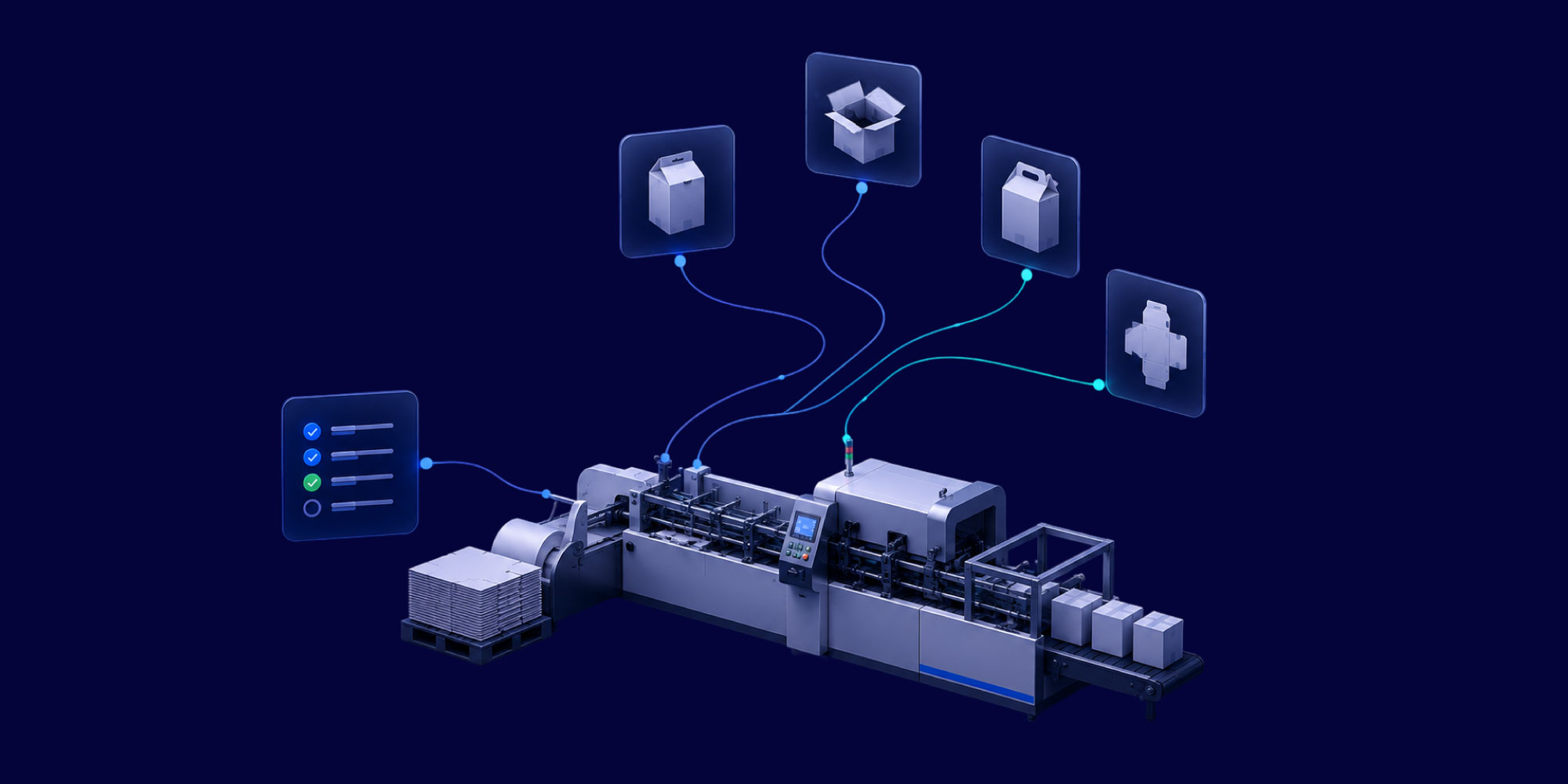
Paxis ERP supports advanced estimating, including time-and-materials estimating and automated machine and process selection. This gives label converters a stronger basis for quoting than memory or manual calculation alone, and a clearer defence against short-run margin erosion. The objective is simple: quote faster, quote with greater confidence, and avoid pricing work in ways that look attractive but deliver little profit.
What happens after the job matters just as much
The actual-cost problem for short-run work
A quote is only the start. The real question is what happened after the job was produced. Did the job use more material than expected? Did it take longer than planned? Was the margin protected? For many smaller converters, that answer is only known late, if it is known at all, which is exactly where short-run margin erosion takes hold.
Disconnected data hides which jobs help the business
When job information, inventory information and operational data are disconnected, it is difficult to learn from the work being done. The team may know that the month felt busy, but not which jobs helped the business and which ones quietly absorbed capacity.
Inventory and waste control are short-run margin issues
Material visibility protects profitability
Material control is directly connected to profitability. Paxis ERP helps manage raw materials and finished goods, track inventory levels and support low-supply notifications. That matters because over-buying, under-buying and last-minute material decisions all affect the real cost of production. Better visibility does not remove every supply issue, but it gives the team more time to respond and more confidence in what is available, reducing the conditions that allow short-run margin erosion to take hold.
Operational insight without enterprise complexity
Paxis ERP also supports operational insight through simple data collection. For a smaller converter, this is not about producing complex enterprise reports. It is about helping the owner and team see enough of the real picture to make better decisions, job by job.
Short runs need system support to stay profitable
Short-run work can be a profitable part of the business, but only if the operating model supports it. The more jobs a converter handles, the more important it becomes to quote consistently, understand actual costs, and reduce manual friction between enquiry, production, and delivery. Left unmanaged, short-run margin erosion will keep finding new places to hide. Paxis ERP is built to help small and growing independent label converters manage that complexity with practical ERP capability. It does not ask the business to become larger than it is. It gives the business a clearer view of what each job requires and how each job contributes, so short-run margin erosion is no longer invisible.
Frequently asked questions
What is short-run margin erosion, and why does it often go unnoticed?
How do disconnected tools contribute to margin erosion for label converters?
How does Paxis ERP improve quoting to protect short-run profitability?
What happens after the job, and how does Paxis help teams learn from actual costs?
How does better material visibility in Paxis ERP protect margins without enterprise complexity?
Ready to see Paxis in action?
Schedule a personalized demo and see how ePS fits your operation.