Two converters make functionally similar packaging. One consistently earns Grade A. The other lands in Grade C. From 2030, that gap alone changes what their shared customer pays in EPR fees, and it has nothing to do with either converter's price, quality, or service. PPWR recycling grades are a system most manufacturers have not started to take seriously yet, and the biggest commercial impact may be buried inside the regulation.
How PPWR Recyclability Grades Actually Work
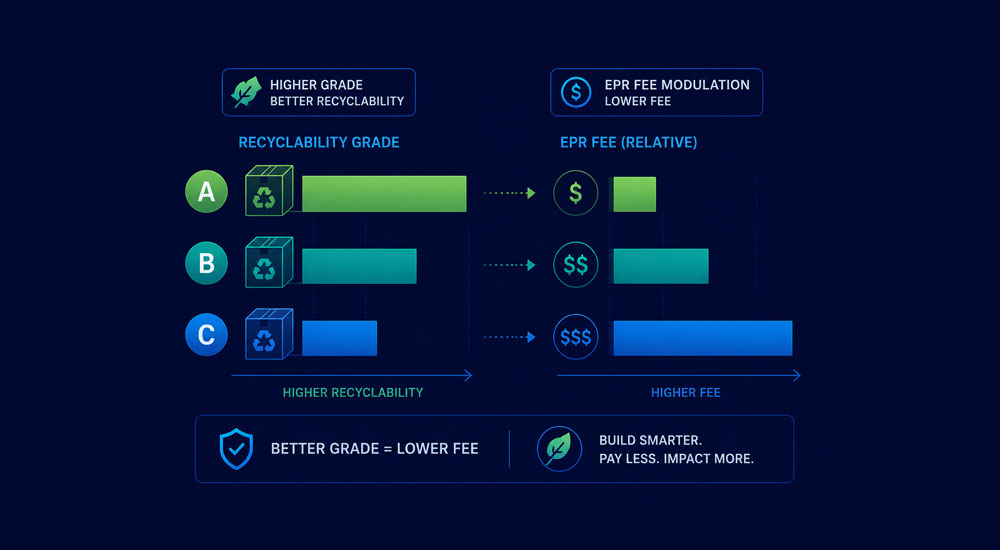
The PPWR sets three packaging recyclability grades. Grade A means a recyclability rate of 95% or more. Grade B covers 80% and above. Grade C sits at the minimum threshold of 70%.
From 1 January 2030, anything below Grade C is barred from the EU market. By 2038, Grade C is not enough either. Only A and B stay acceptable.
Where the Grading Criteria Come From
The design-for-recycling criteria used to assess and grade packaging arrive in delegated acts by January 2028. They will weigh factors such as whether packaging waste separates cleanly into different recycling streams, whether any substances present hurt recyclability, and what the material mix looks like overall.
EPR fee modulation then has to follow those grades within 18 months of the delegated acts taking effect. That creates a window of roughly two to three years between publication of the criteria and the first invoice with grade-based charges.
Do not treat that window as spare time. Treat it as the lead time you need to change design and materials on your own schedule, rather than after the fees are already live.
The Earlier Obligation Behind the Grading System
Before grading fully kicks in, the PPWR adds a design-for-recycling duty from 1 January 2030, or two years after the delegated acts take effect, whichever comes later. Every pack placed on the EU market has to be designed for material recycling, full stop.
Four Questions to Ask About Your Current Packaging
The detailed rules will come with the delegated acts, but manufacturers in folding carton, flexible packaging, and labels do not need to wait for them before they start asking the right questions:
- How many distinct material streams does the pack actually contain?
- Can mechanical sorting separate those streams cleanly?
- Do your inks, adhesives, and coatings hurt the recyclability of the substrate underneath?
- Is there anything in the pack that does not need to be there, but still pulls the grade down for no functional reason?
None of these questions is new on its own. What is new is that the answers will directly determine market access and cost, and they will need documentation to back them up.
What Low PPWR Recyclability Grades Cost You Commercially
A packaging recyclability grade of C means a higher EPR bill for every customer who uses that pack. That is not an abstract eco metric anymore. It is a line item that will start showing up in procurement talks well before 2030, because brand owners will want to know which suppliers are quietly adding cost.
Why Unverified Claims Won't Hold Up in Procurement
That creates an uneven playing field fast. Manufacturers who understand their own recyclability performance clearly, and can put a number on it with confidence, have real leverage in those talks. Manufacturers who cannot will be at a disadvantage no matter how recyclable their products may be, because in procurement, an unverified claim and no claim at all look the same.
This is not made-up or far off. EPR fee modulation requires producers to know the grade of every packaging format they place on the market, and they will get that information from suppliers and converters. The more structured that data flow is, the smoother the whole system runs.
Recycled Content Labelling: Technically Voluntary, Practically Not
Alongside the mandatory grading, the PPWR allows voluntary labelling of packaging with the share of recycled or bio-based content it contains, as long as it follows implementing act specs and uses the checked calculation method once that exists.
Why 'Voluntary' Doesn't Mean Optional Here
Call it voluntary if you like. For manufacturers supplying brand owners with public green pledges, giving recycled content data is not optional in any way that matters commercially. The only credible way to do it is with production data that can stand up to scrutiny, not a supplier assurance and a shrug.
Put the mandatory grading, the fee modulation, and the technically-voluntary-but-actually-required content data together, and the picture is clear: the packaging market is becoming a structured, checkable, financially consequential system, not a collection of good intentions. Manufacturers who treat it that way now will be the ones holding the advantage once it fully takes hold.
Why the Timing on Recyclability Grades Matters Now
The delegated acts land by January 2028. That gives manufacturers roughly two years to understand what the criteria will require and act on it, and lead times for real packaging design changes are never short. Material approval, customer approval processes, tooling changes for label or flexible formats: none of that happens quickly.
Starting to assess how your current product range would perform under PPWR recyclability grades is not premature. It is close to exactly on time. Wait for the delegated acts to be published before you start, and you will be doing the analysis under pressure instead of on your own terms.
At its core, this grading system is an attempt to make the environmental performance of packaging financially clear. That clarity cuts both ways. Knowing your own numbers, and having the data to prove them, is as much an opportunity as it is an obligation.
PPWR just became a data problem. Here's why that's good news.
Discover why packaging compliance is becoming a data challenge, and how connected information can turn regulatory change into an opportunity.