One Clear OS for Digital and Analog Label Workflows
If you run a label converting business today, chances are your production floor is a mix. Digital work sits next to analog work. Short runs sit next to repeat orders. Customer requirements shift from one week to the next. That variety isn't the hard part. The hard part is managing the information that has to move alongside all of it. In a digital and analog label workflow, that flow of data is the real challenge.
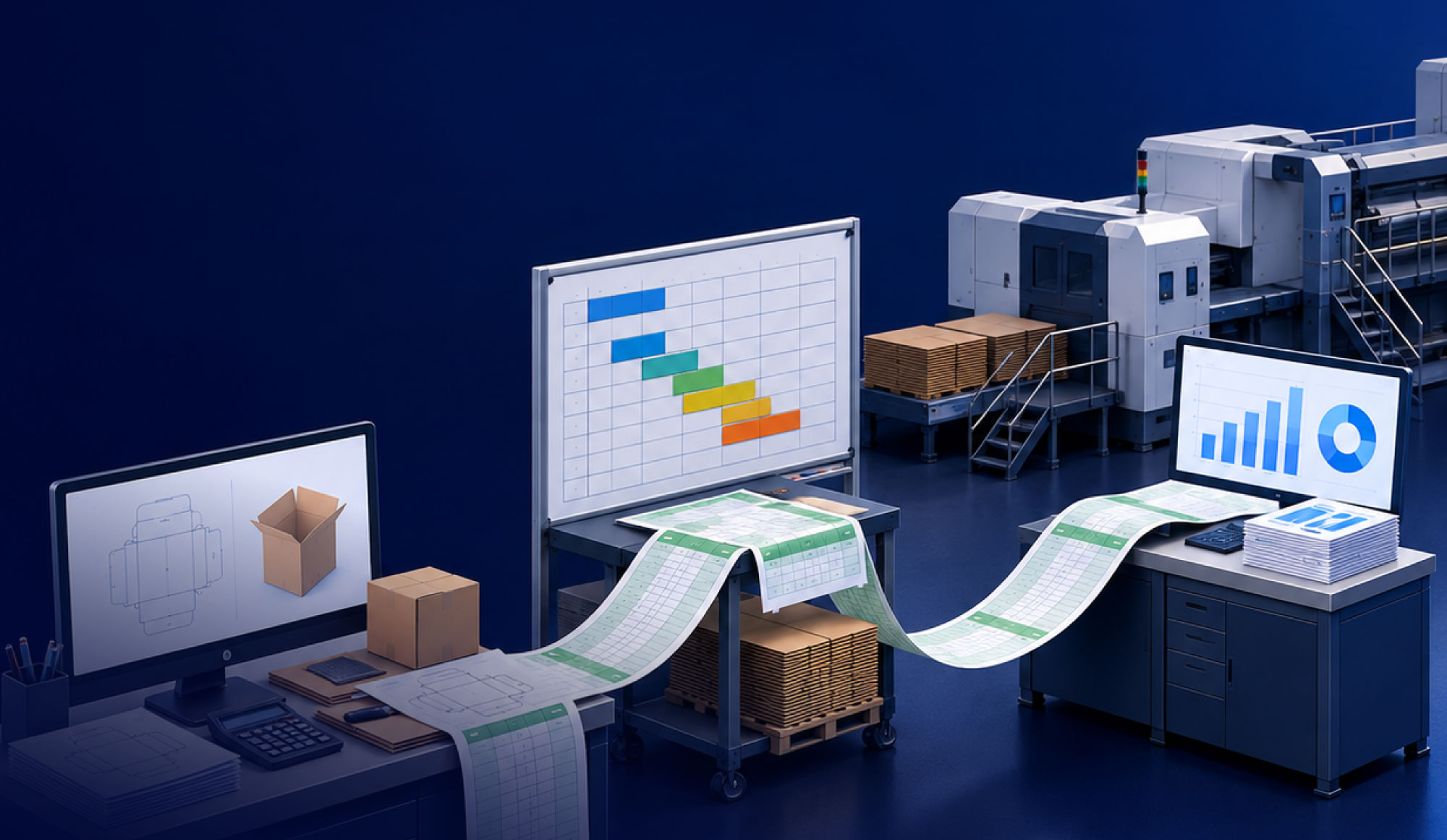
A converter can have great equipment and a skilled team and still lose time, not because of production capacity, but because quoting, orders, materials, and production information aren't talking to each other.
Why a mixed workflow creates real pressure
Digital and analog label jobs don't follow the same playbook. They need different assumptions, different production routes, and different cost considerations. To do this well, the business has to understand each job, quote it correctly, manage the order, check material availability, and keep production moving without delay.
When each of those steps lives in a separate file or depends on someone remembering to pass along a detail, the operation slows down. Not because the equipment is slow. Because the information around it is disconnected.
Paxis is built with out-of-the-box, packaging-specific tools for both digital and analog labels. It's designed to bring these workflows into one cloud-based ERP environment, which matters a lot for small and growing independent converters who don't have a large back-office team to manage the gaps manually. In practice, it serves as a label converter ERP that unifies quoting, scheduling, and production data in one place.
Why generic systems don't cut it
A standard business system can track customers, orders, and invoices just fine. But label converting needs more specific capability than that.
- It needs estimating that actually accounts for time and materials.
- It needs machine and process selection built for the job.
- It needs order management that works at the SKU or item level.
- And it needs inventory visibility connected to real production activity, not a static spreadsheet updated once a week.
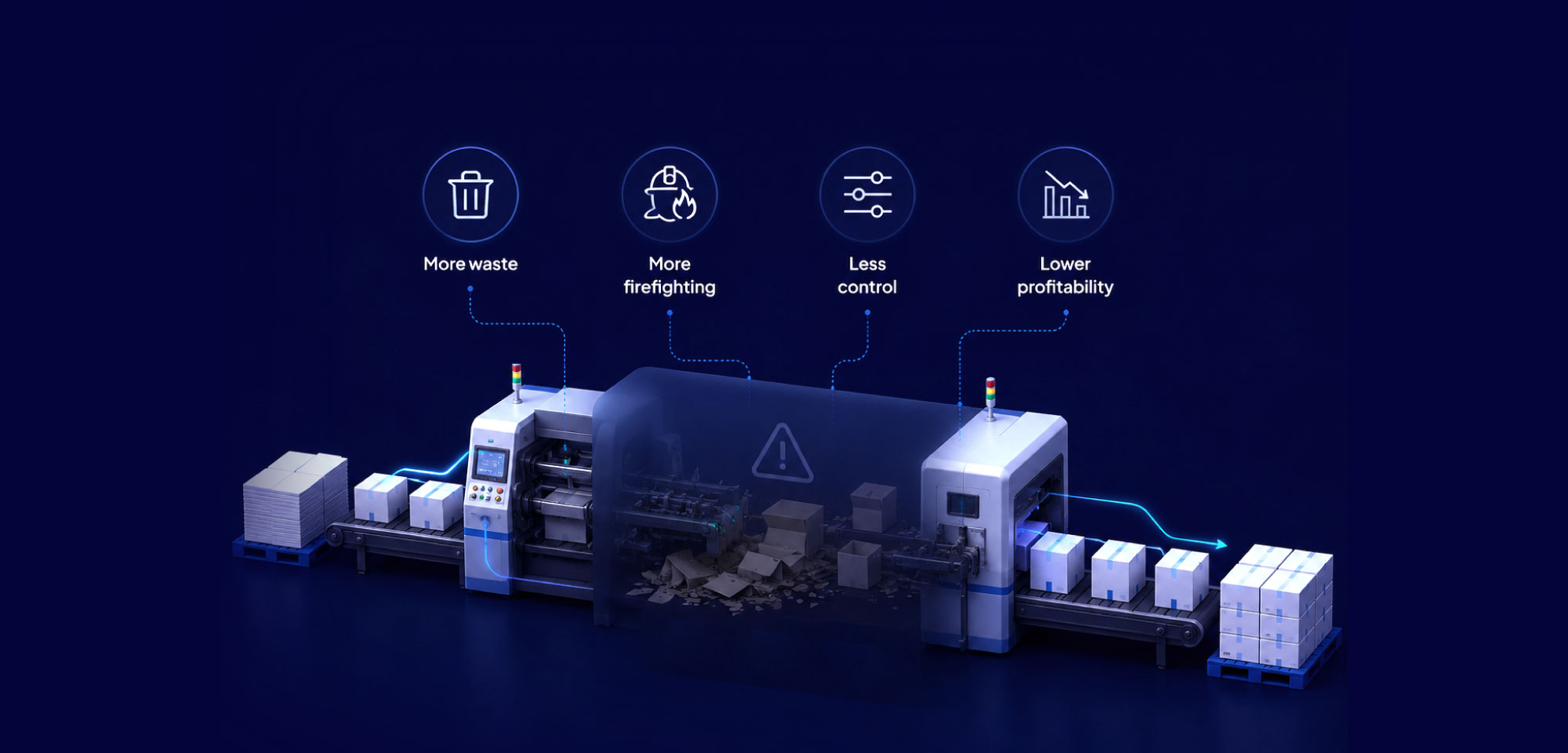
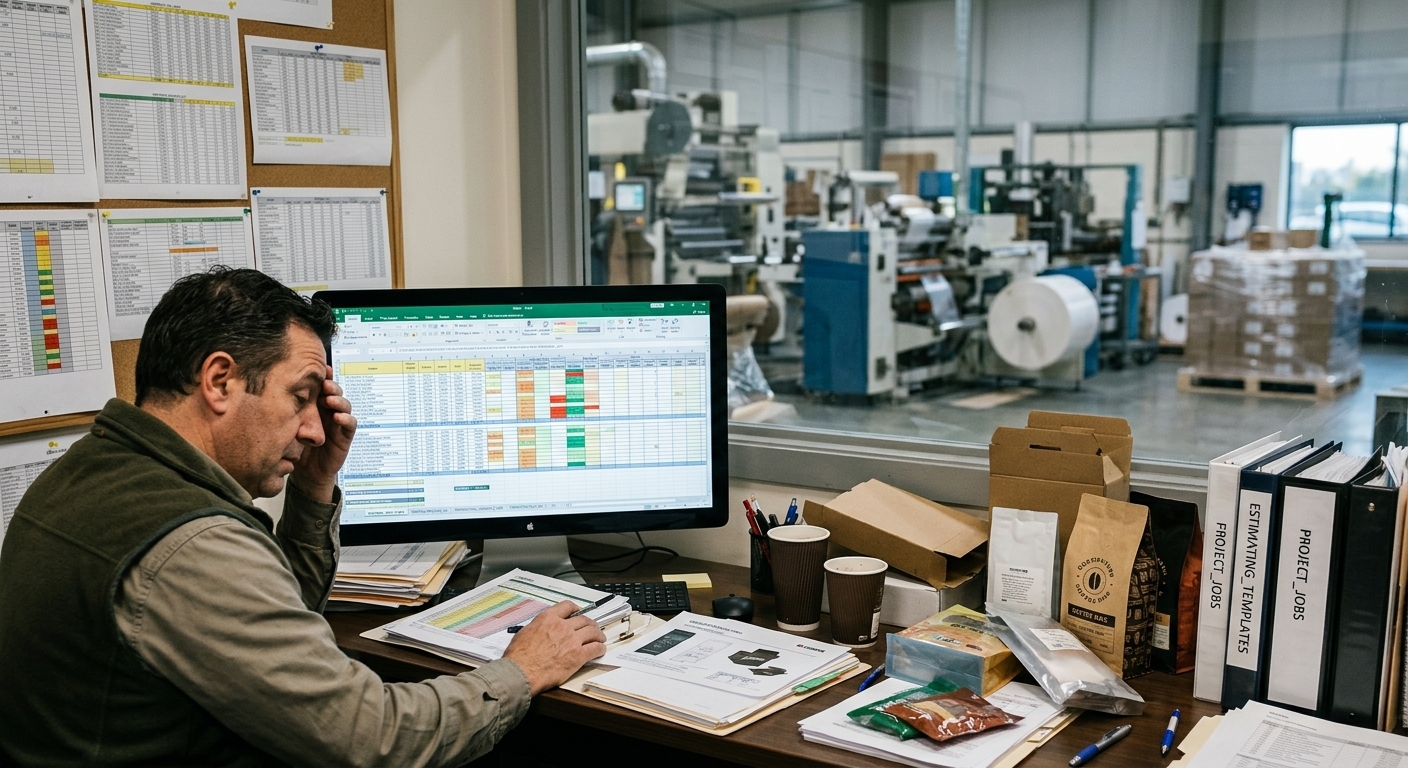
Without that, teams end up building their own workarounds. Those workarounds might solve the problem in the moment, but they also introduce duplication, missed updates, and a business that depends on people remembering what happened and what needs to happen next. That's a fragile way to run daily operations, especially as the business grows.
A practical operating layer for converters
Paxis brings together the areas a label converter actually needs to manage every day:
- quotes and orders
- estimating
- production management
- inventory
- traceability
- purchasing
- shipping
- accounting integration
Put together, this gives the business one clear operating layer across both digital and analog work.
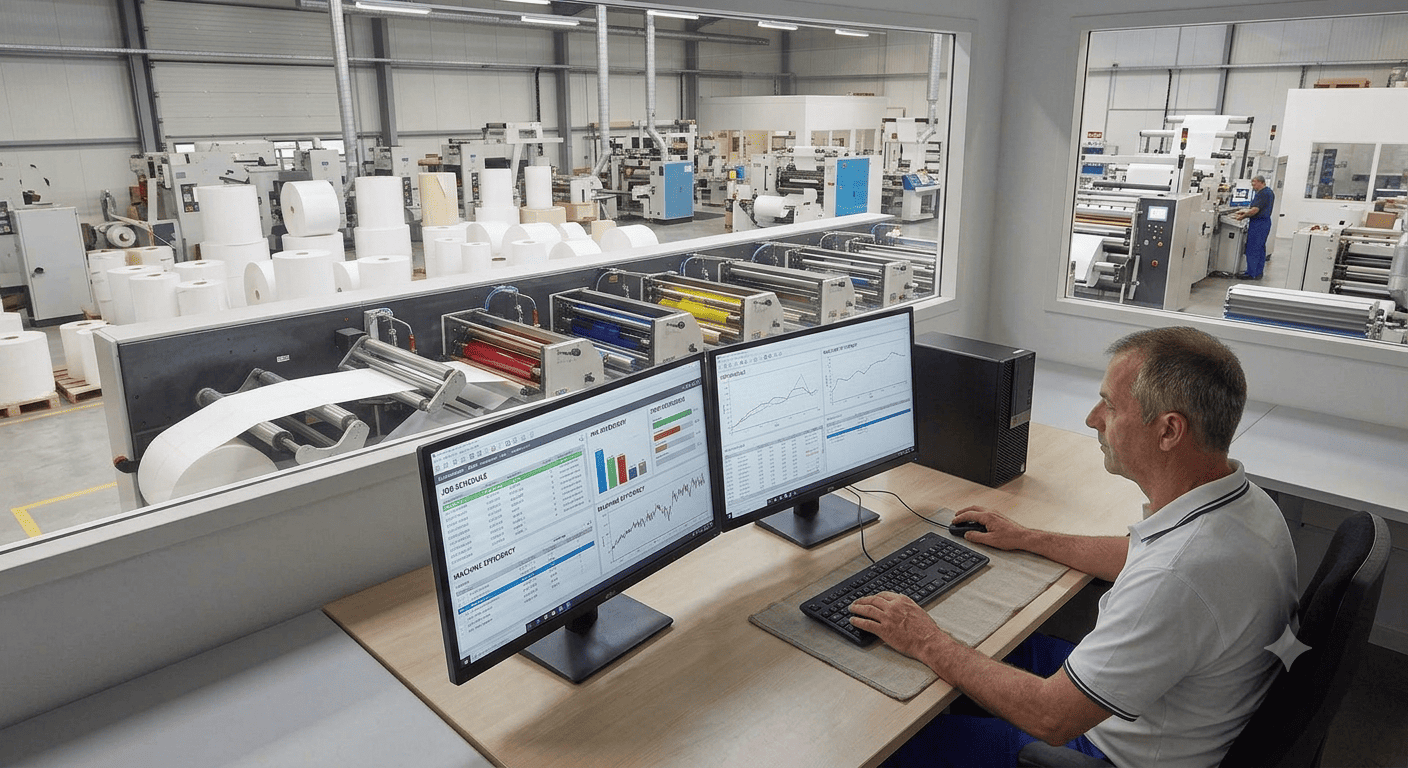
The point isn't to add complexity. It's the opposite. When the quote, the order, and the operational record all come from the same system, the information becomes something the team can actually trust, and that trust is what lets the business respond faster with less manual back-and-forth.
Cloud matters because nobody has spare time
Independent converters are busy running the business, not managing IT infrastructure. Paxis is cloud-based packaging ERP software built for quick onboarding, and it includes Smart Help to support implementation and help the team actually adopt the system day to day.
For a smaller converter, how easily a system fits into daily work matters just as much as what the system can technically do. A feature list means nothing if the team can't realistically use it while still getting jobs out the door.
Better control across the full job lifecycle
Digital and analog work are going to keep sitting side by side for most converters. The businesses that manage that mix well will be the ones that can quote accurately, reduce rework, keep materials under control, and actually understand what each job costs to produce. Paxis gives small and growing independent label converters a practical way to bring that level of control into one clear system.
Ready to see Paxis in action?
Schedule a personalized demo and see how ePS fits your operation.