
Key People Every Converter Relies On
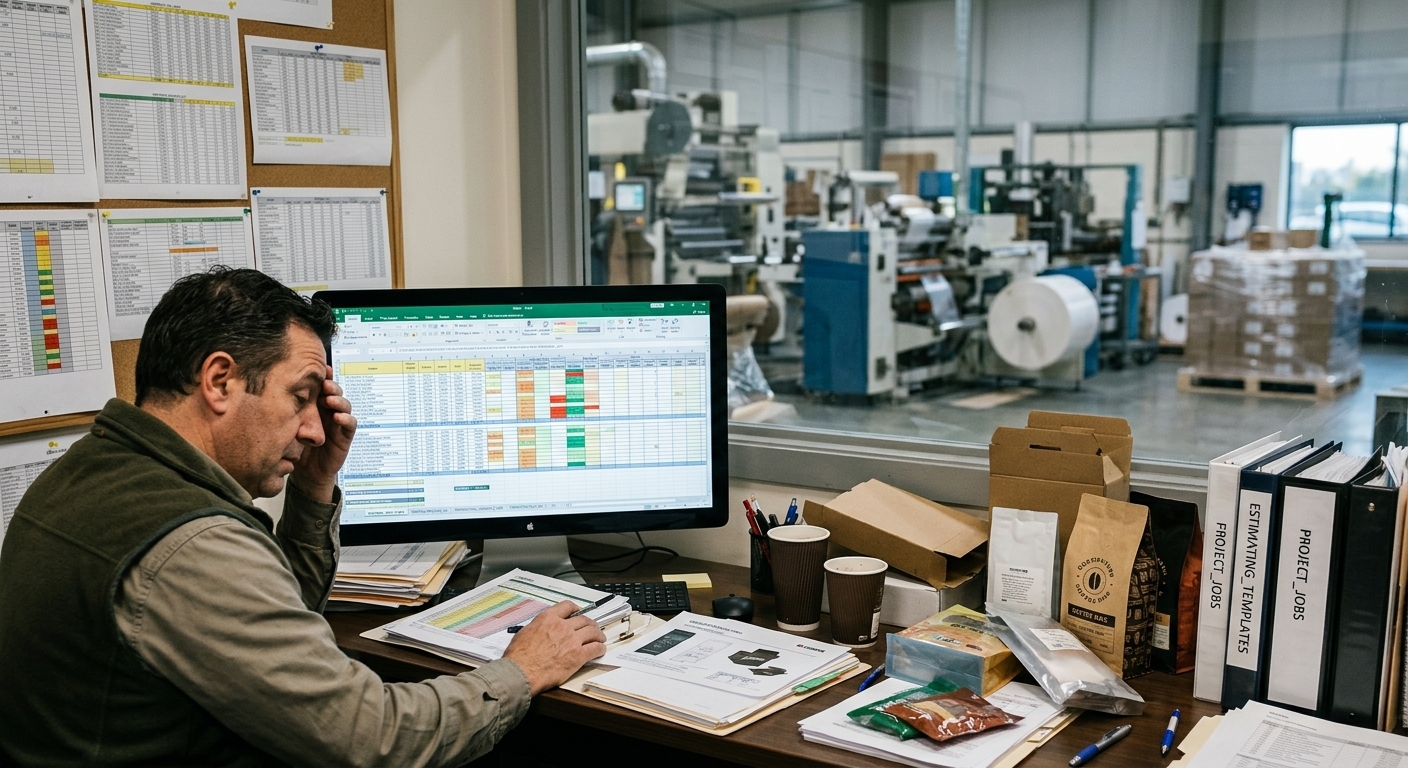
Every small label converter has a few people the whole operation quietly depends on:
- The estimator who just knows how to price the awkward jobs.
- The owner who remembers exactly what a regular customer always orders.
- The production lead who can tell you which material behaves badly on which machine before anyone finds out the hard way.
Small label converters often depend on tribal knowledge held by a few key people, creating delays and risk when those people are unavailable. This is a system problem, addressed by centralizing quotes, estimating, orders, inventory, production, and customer data in Paxis ERP so teams can work consistently without relying on memory. With cloud-based Smart Help and streamlined onboarding, Paxis enables quick adoption for small teams. The result is greater resilience, faster responses, and scalability that will support experienced staff, not replace them.
Why Tribal Knowledge Becomes a Risk
That knowledge is real and it's valuable. It's also a risk when it only exists in someone's head. This is a classic tribal knowledge risk business problem.
In a small business, it's completely normal for one person to wear several hats. That's actually part of what makes smaller converters fast and agile. Decisions get made quickly because the people involved genuinely understand the work. But as the business grows, that same setup can start working against you.
The Hidden Cost of Relying on Memory
The problem shows up the moment that key person isn't available:
- A quote takes longer than it should.
- A customer gets an answer that sounds less confident than usual.
- A material decision sits waiting because the one person who'd normally make the call is out.
- A repeat job has to be pieced back together from memory instead of pulled up in seconds.
The business keeps running. It just runs with more friction, more delay, and more risk of getting something wrong.
It’s a System Problem, Not a People Problem
Here's the thing though: this isn't really a people problem. It's a system problem. The knowledge that helps a company take care of its customers shouldn't vanish just because someone's on holiday, moves on to a new job, or simply has too much on their plate that week.
Small Teams Need Easier Access to Shared Information
Paxis is built specifically for small and growing independent label converters, and it's not designed to diminish the value of experienced staff. It's built to support them by putting more of that operating knowledge into a system the whole team can actually use.
When quotes and orders, advanced estimating, inventory, production management, and customer information all live in one ERP built for small business continuity, the business relies a lot less on scattered spreadsheets or whatever one person happens to remember. That builds real consistency without forcing a small company into the kind of complexity that only makes sense for a much bigger operation.
Why Onboarding Matters as Much as Features
For a lot of small businesses, the real barrier isn't the software itself. It's adoption. Nobody can afford to pull key staff away from actual work for weeks just to learn a new system. Paxis is cloud-based, and Smart Help is built in specifically to support fast implementation and onboarding. That matches what small teams actually need: real capability without a heavy training burden getting in the way of the day-to-day.
A System That Makes Good People Even Better
The best ERP systems don't try to replace the people who understand the business. They help those people work more consistently, share what they know more easily, and stop repeating the same manual checks over and over. For an owner, that means the business becomes less fragile. For the team, it means fewer delays and clearer information, even on a hectic day.
Resilience Is a Business Advantage, Not Just an Efficiency Gain
Customers never see the scramble that happens behind the scenes when key information goes missing. All they see is whether the quote showed up on time, whether the order was handled correctly, and whether they got clear updates along the way. Paxis helps small label converters build resilience into exactly those moments. If a business can keep quoting, ordering, and managing work with confidence even when one key person is away, that's not just good operational hygiene. It's what actually lets the business scale.
Ready to see Paxis in action?
Schedule a personalized demo and see how ePS fits your operation.