
KEY TAKEAWAY: Data-driven resilience is a business strategy. The ability to respond faster than competitors is a massive operational advantage
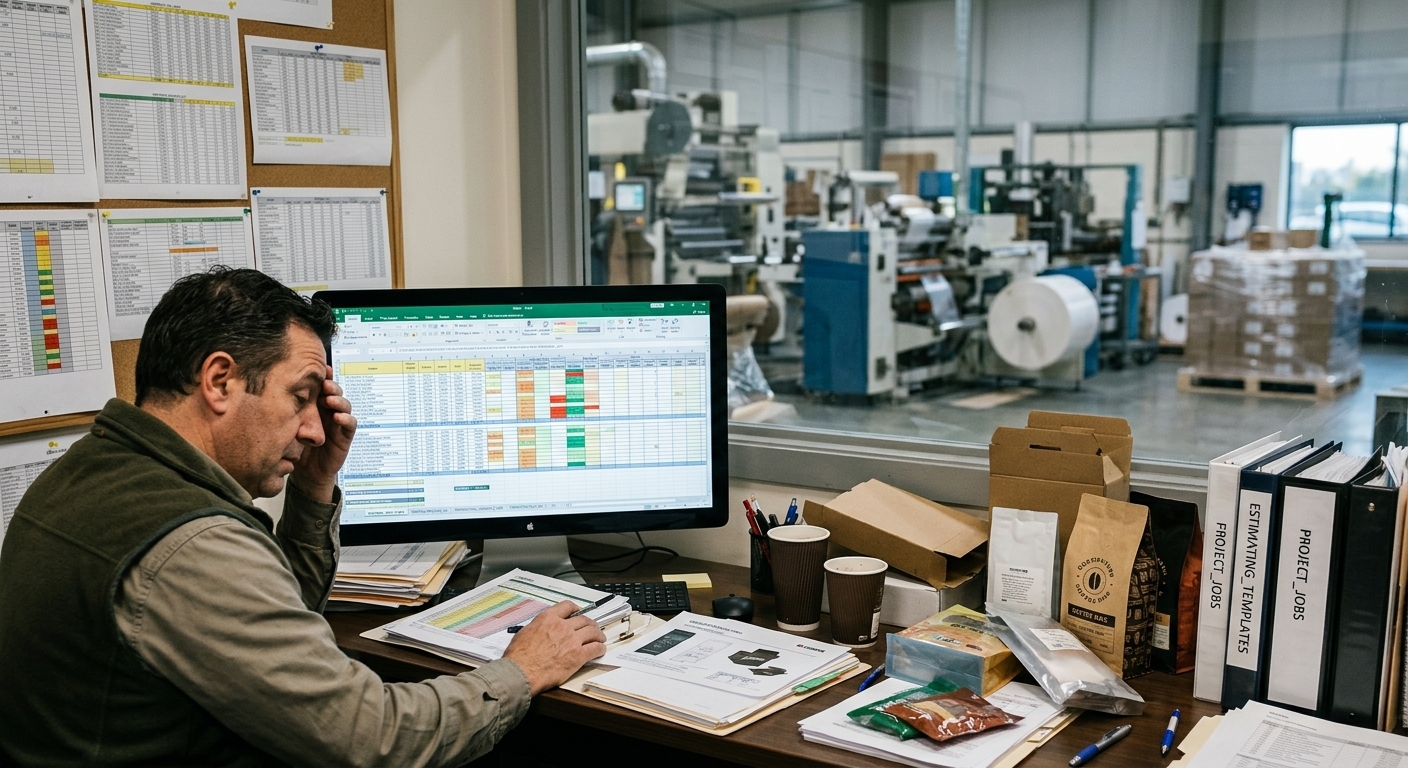
Walk into most corrugated plants, and you will find a quality lab. ECT presses, moisture meters, compression testers: the equipment for measuring board performance exists, technicians are trained to use it, and results are being diligently recorded somewhere, usually in a spreadsheet or a standalone QA system.
And then, in many plants, the data stops. The results are filed. A report may be generated at the end of the week. If a result fails a threshold, someone may be notified. But the connection between what the lab measures and how the corrugator is being run is often weak, informal, or absent altogether.
This is the missing feedback loop, and its absence is one of the most significant sources of preventable quality variability in corrugated manufacturing.
What the Feedback Loop Should Look Like
The purpose of quality measurement is not to document what happened. It is to inform what happens next. A lab result is most valuable not as a historical record but as a signal, one that, interpreted in context and acted on promptly, can prevent the next hour of production from repeating the same problem.
A functioning feedback loop connects lab results to production decisions in something close to real time. When ECT results begin to trend lower, not failing yet but moving in the wrong direction, the corrugator operator should be aware of this, and there should be a defined process for deciding whether and how to respond. When bond strength shows a dip that correlates with a known incoming roll, that information should be available to the operator before the next reel is loaded, not after the run is complete.
This requires more than good data collection. It requires that quality data is structured, accessible, and presented in a way that supports decision-making on the production floor rather than simply feeding a reporting function.
The Recipe Connection
The most direct expression of a functioning feedback loop is in recipe management. When lab results inform recipe decisions, when an operator can look at the current quality trend and adjust a heat setting, glue volume, or speed on the basis of measured outcomes rather than intuition, the process is using its data intelligently.
This is also where the value compounds. A single well-informed recipe adjustment, made at the right moment on the basis of good quality data, may prevent hours of off-spec production. When those adjustments are recorded, when the recipe change is documented alongside the quality trigger that prompted it and the outcome that followed, the plant is building institutional knowledge that makes the next similar situation easier to manage.
Over time, the documented record of "when this result occurs, this recipe response works" becomes a resource that is genuinely more valuable than any individual operator's memory. It is available to every shift, it does not retire, and it improves with every new data point.
Why This Is the Foundation of Repeatable Quality
Consistent quality in corrugated manufacturing is not an accident and it is not purely the product of good equipment. It is the product of a process that understands itself, one that generates data, interprets that data intelligently, acts on it through informed decisions, and records the outcomes to improve future decisions.
The feedback loop between lab results and recipe decisions is the mechanism by which a corrugated plant develops that self-understanding. Without it, quality depends on individual experience and the goodwill of circumstances. With it, quality becomes something that is designed, managed, and continuously improved.
For plants navigating the twin pressures of lightweighting and material variability, closing this loop is not just a quality improvement initiative. It is a business resilience strategy. The ability to detect, respond to, and learn from process variation faster than competitors is a meaningful operational advantage.
If closing this feedback loop is something you're working on, our recipe management guide outlines a practical framework for connecting lab results to production decisions and building a recipe change process that captures what works and makes it available to every shift.