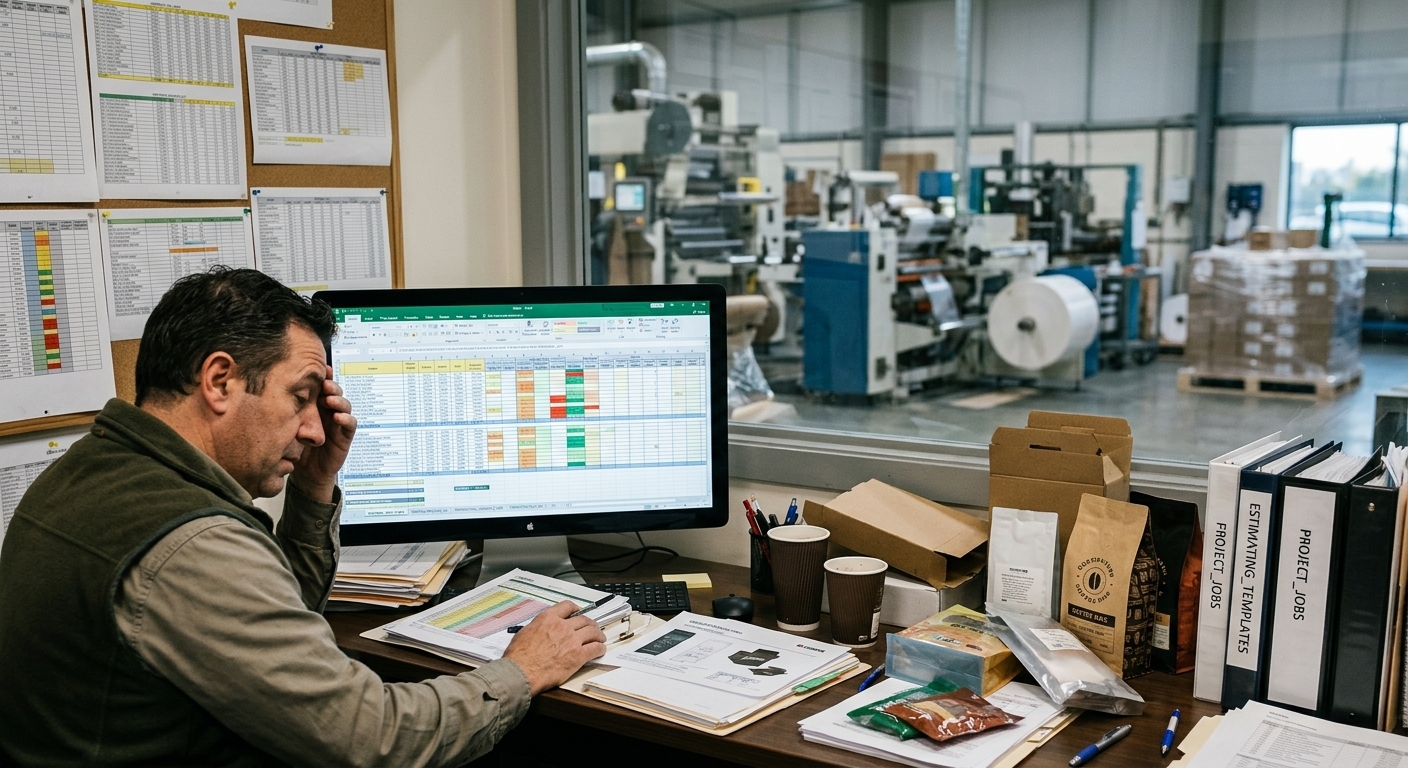
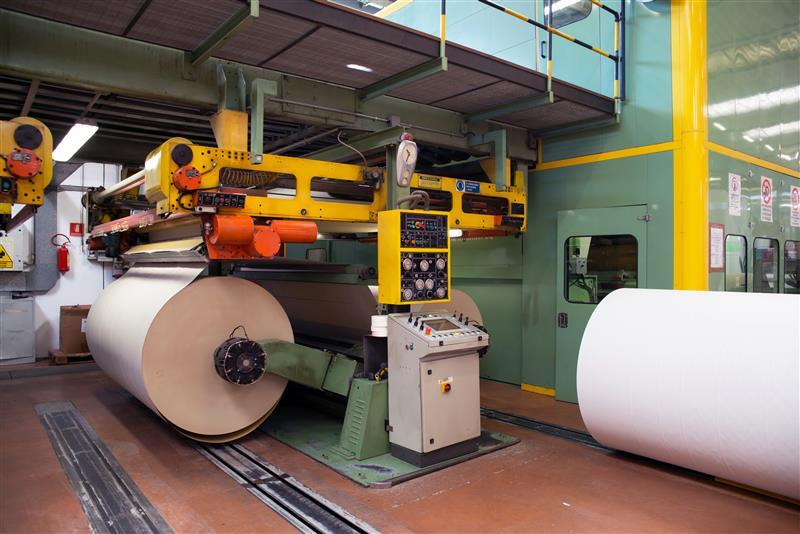
KEY TAKEAWAY: Metrics are a system, not a checklist. Tracking them together allows you to see how a moisture spike correlates to a dip in bond strength.
Corrugated plants generate a lot of data. Roll weights, machine speeds, shift outputs, scrap percentages, the numbers accumulate quickly. But when it comes to understanding whether the board you're producing will actually perform in the field, five metrics stand out as the ones that matter most.
1. Edge Crush Test (ECT)
ECT measures the force required to crush a small section of corrugated board on its edge – effectively testing the compressive strength of the fluting and liner working together. It is one of the most widely used specifications in the industry, and for good reason: ECT is directly related to the stacking strength of a finished box.
When ECT results are consistently meeting spec, it's a strong signal that the corrugator is running well and that the incoming paper is performing as expected. When ECT results are variable (sometimes hitting the target, sometimes falling short), that variability is telling you something. It may point to inconsistent glue application, variation in paper quality between rolls, or settings that aren't optimised for the current materials.
Tracking ECT as a trend over time, rather than as a pass/fail snapshot, gives you a much richer picture of process stability.
2. Box Compression Test (BCT)
Where ECT tests the board, BCT tests the finished box. It measures the maximum compressive load a box can sustain before failure, and it is the metric that ultimately determines whether a box will survive the stacking loads it encounters in storage and transit.
BCT is influenced by ECT, but it is not simply ECT in a box format. The dimensions of the box, the scoring and creasing, and the way the box has been handled all affect the result. A box with solid ECT results can still deliver a disappointing BCT if the converting process has introduced damage to the board's structure.
Monitoring BCT consistently (particularly when lightweight board is in use) is essential for maintaining confidence in finished product performance.
3. Bond Strength
Bond strength measures the adhesion between the fluting medium and the liner – the glue joint that holds corrugated board together. It is often overlooked until something goes wrong, but poor bond strength has a cascading effect on every other performance metric. Board with weak bonds will underperform on ECT and BCT, is more susceptible to delamination in humid conditions, and is more likely to cause problems on converting equipment.
Bond failures can be caused by insufficient glue, glue that isn't curing properly due to heat or speed issues, or paper that has too high a moisture content to allow proper adhesion. A consistent bond strength result indicates a well-controlled gluing process; variability in bond strength is a flag that something upstream needs attention.
PRO-TIP: Inconsistent bond strength is often the harbinger of trouble! If it fluctuates, check your glue viscosity and steam pressure immediately
4. Warp
Warp, the tendency of corrugated board to curl away from flat, is primarily a moisture-related problem. When the liner on one side of the board has a significantly different moisture content to the liner on the other side, differential expansion causes the board to bow.
Warp causes real commercial and operational problems: it slows or jams converting equipment, leads to poor print registration, and produces finished boxes that don't stack squarely. In a lightweight board, where liner weights are already reduced, the tolerances for moisture imbalance are tighter, and the consequences of getting it wrong are more visible.
Tracking warp at board exit gives early warning of moisture management issues before they translate into converting problems or customer complaints.
5. Moisture Content
Moisture content is foundational to almost everything else on this list. The moisture in incoming paper rolls affects glue adhesion, increases the risk of warp, and directly affects the mechanical strength of the finished board. Paper that is too wet or too dry will not perform to the assumptions built into the grade specification.
On the corrugator, moisture management is an active process: steam, heat, and speed all affect the moisture state of the board at various points in the line. Measuring moisture, both in incoming rolls and in finished board, and tracking it consistently gives you the data to understand and manage this process rather than react to its consequences.
Metrics as a System, Not a Checklist
These five metrics are most valuable when tracked together, consistently, and over time. A single test at the end of a run gives you a snapshot; a continuous record gives you a process map. When one metric moves, it often tells a story that becomes clearer when you look at the others in context. ECT variation that correlates with a moisture spike; BCT softness that accompanies a bond strength dip. These patterns are the language of your process, and they're only legible if you've been listening.
Want to see how these five metrics work together in practice? Join our upcoming webinar, where we'll walk through how leading corrugated plants use performance data to make better process decisions and what a consistent measurement programme actually looks like on the plant floor.