
KEY TAKEAWAY: Data-driven quoting transforms you from a commodity supplier into a technical partner who can discuss real-world supply chain survival
The corrugated industry runs on specifications. When a job is quoted, the box is described in terms of board grade: flute profile, paper weights, ECT rating. These labels form the basis of the cost model, the material purchasing decision, and the implicit promise to the customer about what they are buying.
It is a system that has served the industry for decades. But as lightweighting accelerates and material variability increases, a growing number of plants are discovering that grade-based quoting is leaving them exposed, commercially, operationally, and reputationally.
The Problem with Quoting on Grade Alone
When a box is quoted and priced on grade, the underlying assumption is that the grade specification will be reliably delivered. The customer specifies a 32 ECT C-flute box, the plant quotes on its standard bill of materials for that grade, and the job is priced and accepted.
What this model does not account for is variation. Not all 32 ECT board is created equal. Board produced at optimal machine conditions with consistent, high-quality incoming paper will outperform board produced with marginal paper on a corrugator that has not been precisely tuned for the current materials, even if both technically carry the same grade label. The grade describes an intention. It does not guarantee an outcome.
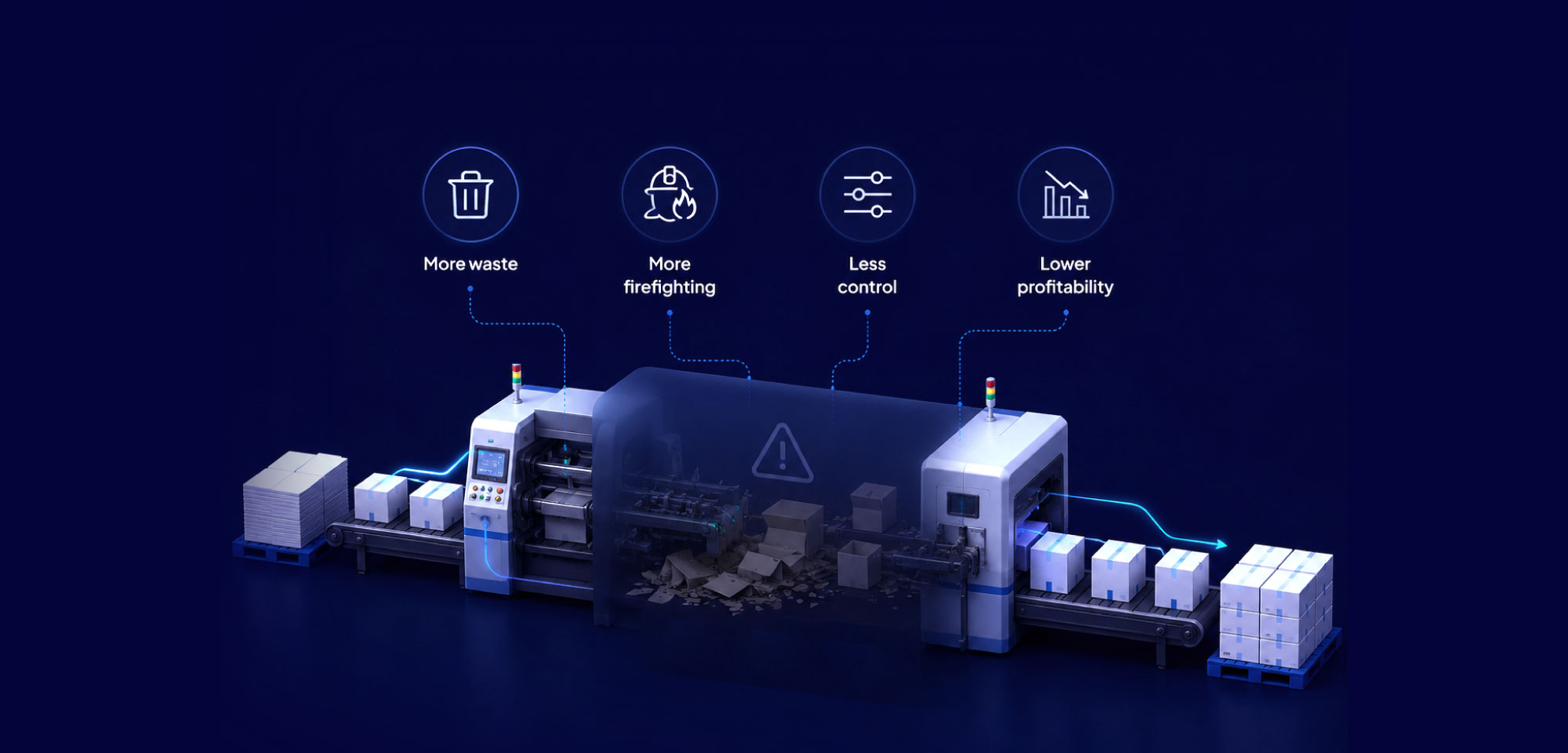
In a world where boxes were over-specified and paper quality was consistent, this gap between intention and outcome was rarely consequential. Today, with lightweighting having removed much of the structural headroom, that gap is where scrap, claims, and customer complaints live.
What Performance-Based Quoting Looks Like
A performance-based approach shifts the quoting reference point from the specification to the measured outcome. Rather than pricing a job on the basis of what a grade should deliver, it builds in an understanding of what the plant's process actually delivers for a given combination of materials and machine settings.
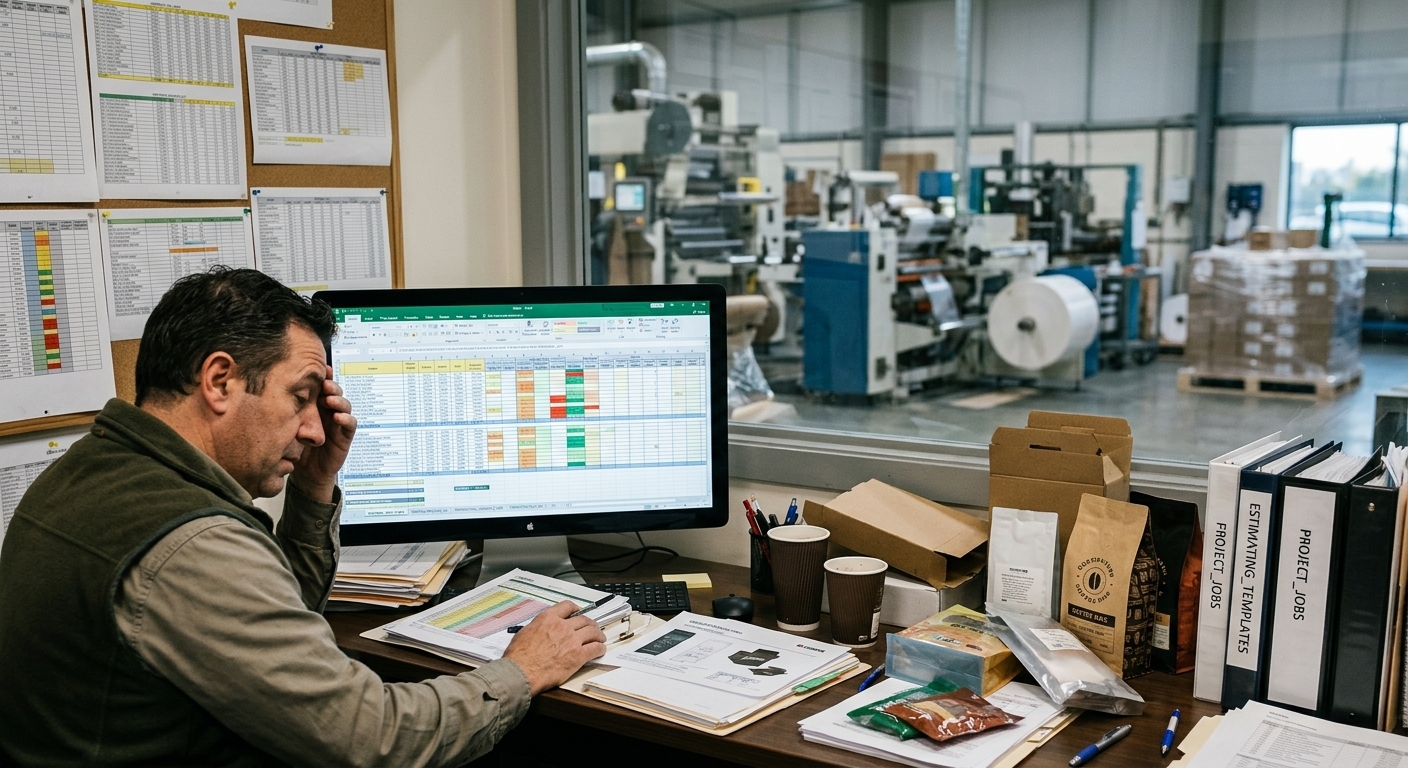
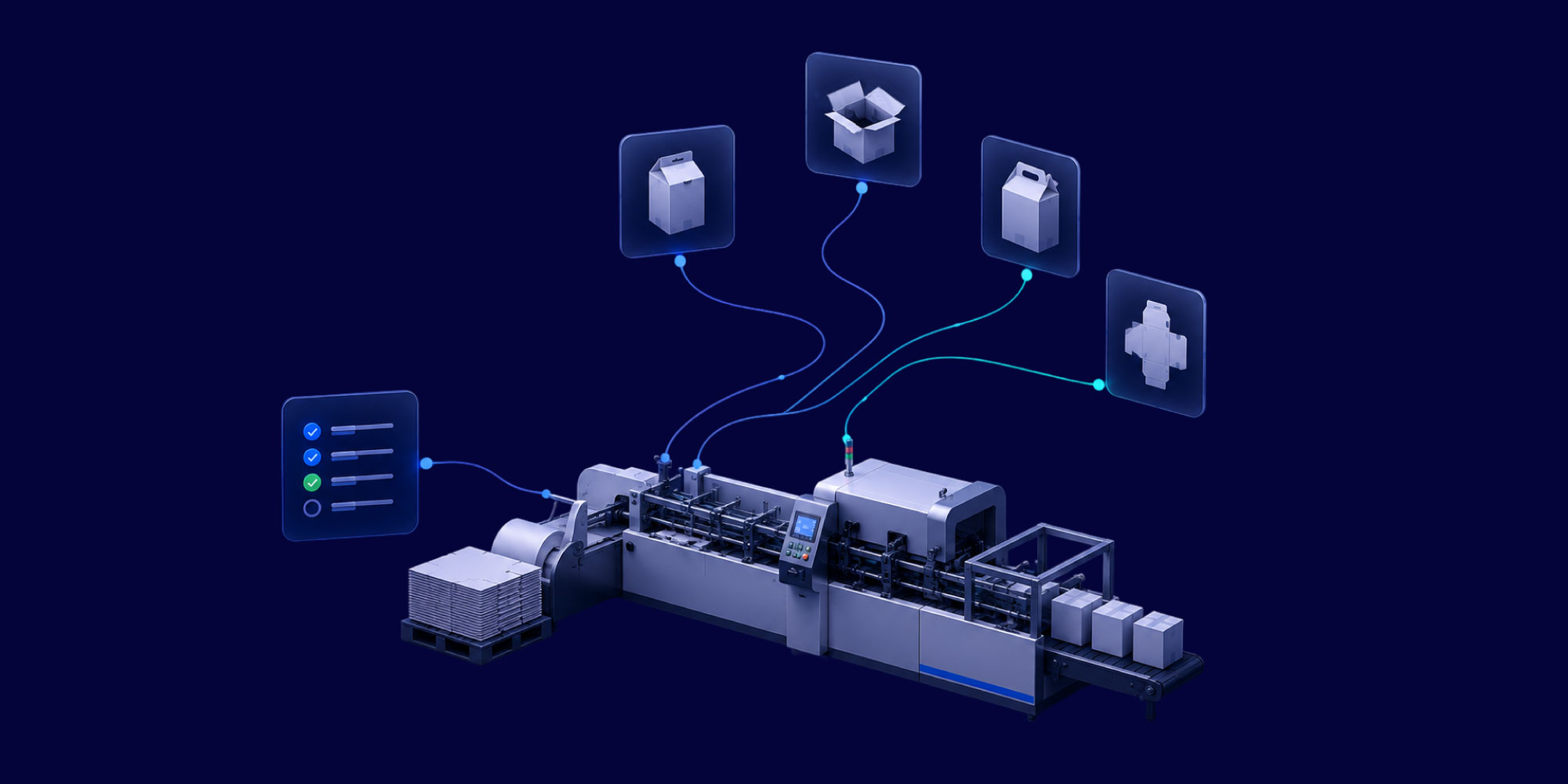
In practical terms, this means connecting quality data to the estimating function. When a plant consistently measures ECT, BCT, bond strength, and moisture, and when those results are linked to the materials and recipes used, it becomes possible to quote with a much clearer picture of the real capability behind the specification.
This has meaningful commercial implications. A plant that knows its board reliably delivers a certain performance level with a given combination of lighter papers can quote that board with confidence and potentially at a cost advantage over a competitor who is carrying more fibre as a buffer against variability they do not understand. Conversely, a plant that identifies through performance data that a particular paper combination is consistently underperforming can address the issue before it becomes a customer problem, rather than after.
PRO-TIP: Industry Benchmark Data show plants using performance-led quoting often see a reduction in 'buffer fibre' costs by 3-5% without increasing failure rates.
Reducing Commercial Risk in the Lightweighting Era
The push to lightweight is not going away. Customers want lower costs and better sustainability credentials, both of which are served by reducing fibre use. The plants that will navigate this most successfully are not those that resist the trend, but those that build the capability to manage it safely.
Performance-based quoting is a key part of that capability. When estimating decisions are informed by real measured outcomes rather than grade assumptions, the commercial risk of lightweighting is substantially reduced. You know what you are quoting because you know what your process delivers.
That knowledge also creates a different kind of conversation with customers. Rather than a discussion about whether a grade meets a specification, it becomes a discussion about what the box actually does: its real compressive strength, its real bond quality, and its real performance in the customer’s supply chain. This is a more valuable conversation and one that positions the plant as a genuine technical partner rather than a commodity supplier.
The Foundation This Requires
None of this is possible without data. Performance-based estimating and quoting requires a consistent record of what the plant’s board actually achieves across different paper combinations, machine settings, and ambient conditions. Building that record is not a one-time project. It is a discipline that, once embedded, transforms the quality of decisions across the business.
Want to see how these five metrics work together in pWe're hosting a webinar on the shift to performance-based estimating in corrugated, covering how to connect quality data to quoting decisions and what it takes to build that capability in practice. If you're thinking about how to reduce commercial risk in a lightweighting environment, it's worth your time.